Differentiating Symptoms: ADHD vs. Schizophrenia - A Guide
Table of Contents
- 1. ADHD vs. schizophrenia: Understanding the Basics
- 2. What is the true difference between ADHD and schizophrenia symptoms?
- 3. Why do we see a massive symptoms overlap ADHD vs schizophrenia in adults?
- 4. What are the biggest challenges of differential diagnosis ADHD and schizophrenia?
- 5. How does the misdiagnosis ADHD as early schizophrenia happen?
- 6. Can you have ADHD and schizophrenia at the same time?
- 7. How do doctors handle a comorbidity ADHD and schizophrenia diagnosis?
- 8. What is the impact of ADHD on schizophrenia prognosis?
- 9. What are the shared genetic risk factors ADHD and schizophrenia?
- 10. What are the treatment options for co-occurring ADHD and schizophrenia?
- 11. How do doctors manage medication for ADHD and schizophrenia concurrently?
- 12. What are the best therapy approaches for dual diagnosis ADHD schizophrenia?
- 13. What are the most useful coping strategies for ADHD and schizophrenia?
- 14. How can families find support groups for ADHD and schizophrenia patients?
- 15. What are the personal stories living with ADHD and schizophrenia telling us?
- 16. Taking Action Today
Only 37.5% of children with focus issues grow up completely free of severe, life-shattering mental health conditions. That is a terrifying statistic from a major Mayo Clinic-led study published in Pediatrics. It means over 60% of kids who struggle to pay attention face an even bigger storm when they grow up. Even worse, if you have severe childhood focus issues, you have a 4.74 times higher risk of developing schizophrenia later in life. Imagine watching a loved one slowly slip away from reality because you missed the early warning signs. We cannot let that happen. We must act now. You need to read this guide to understand ADHD vs. schizophrenia before a silent crisis takes over your home.
We want you to know you are not alone in this fight. We have Dr. Michael J. Zizmor on our side. He is a mental health physician with over 40 years of experience helping families navigate these scary brain conditions. He started his journey at the University of California, Berkeley, where he got his undergraduate degree in Psychology. This laid the foundation for his life's work of understanding the human mind. He went on to get his medical doctorate at the University of Kansas School of Medicine. After that, he did his medical internship at Boston University-affiliated hospitals to gain real clinical skills. He then completed his psychiatric residency training at St. Elizabeths Hospital in Washington, DC. Dr. Zizmor brings all this deep medical knowledge to his website, Zizmor, and his blog. We are here to help you protect your loved ones.
ADHD vs. schizophrenia: Understanding the Basics
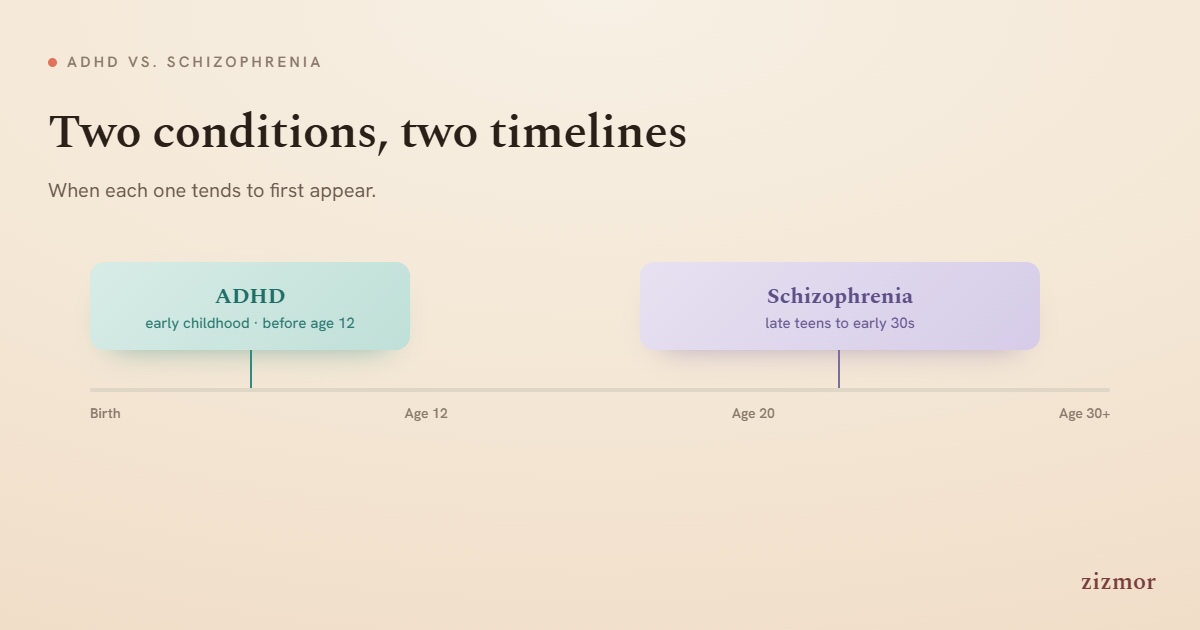
Many children in the United States have a hard time sitting still, waiting their turn, or paying attention in class. Doctors often call this common issue attention-deficit/hyperactivity disorder. But some families worry about a much more serious brain illness called schizophrenia.
Schizophrenia is a long-term brain illness that changes how a person thinks, acts, and feels. It affects less than 1% of the adult population in the United States. However, it can make it very hard for a person to tell what is real from what is imagined.
Understanding the differences between these conditions is vital for brain health. Dr. Zizmor draws on his 40 years of experience to help families recognize warning signs before severe problems develop. This guide breaks down the science in simple words so you can protect your family.
What is the true difference between ADHD and schizophrenia symptoms?
The first condition is a neurodevelopmental issue. That means it starts very early, because the brain develops differently. The second condition is a psychotic illness. This means it usually shows up in teenagers or young adults, causing them to lose touch with reality.
The main behaviors in the first condition include moving around too much, talking constantly, and making quick decisions without thinking. The second condition involves a deep break from the real world. This break is called psychosis.
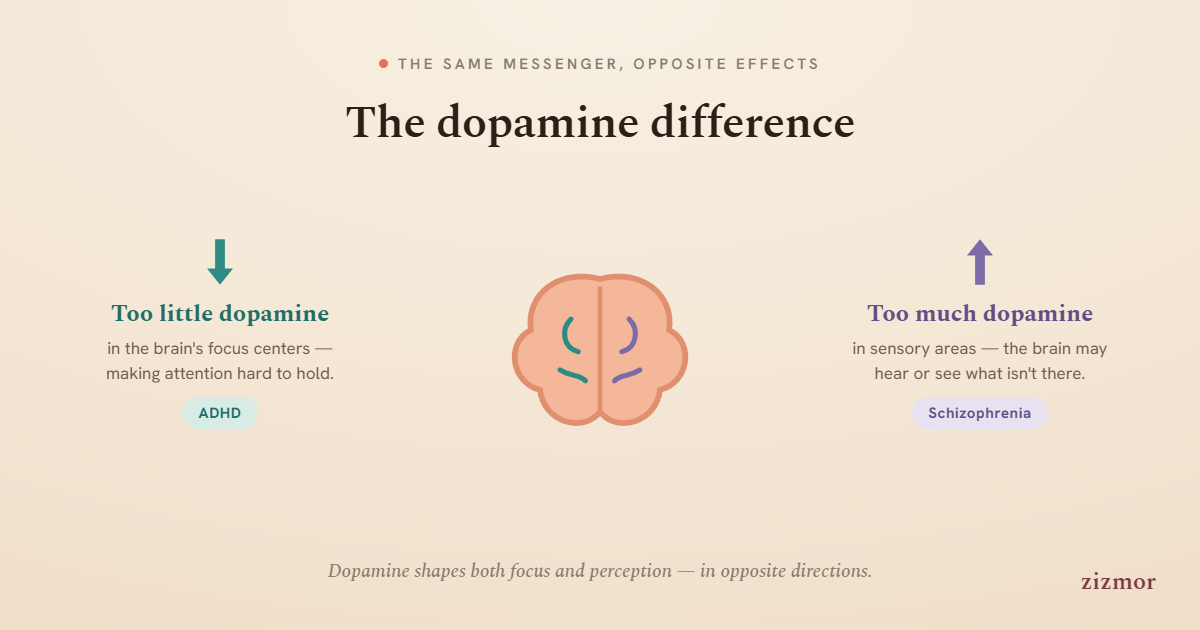
In the brain, a neurotransmitter called dopamine plays a major role in both conditions. Think of dopamine as a tiny delivery truck carrying messages about focus and pleasure. People with the first condition often have too little dopamine in some brain areas, which makes it hard to focus. People with the second condition often have too much dopamine in other brain areas, which makes them see or hear things that are not there.
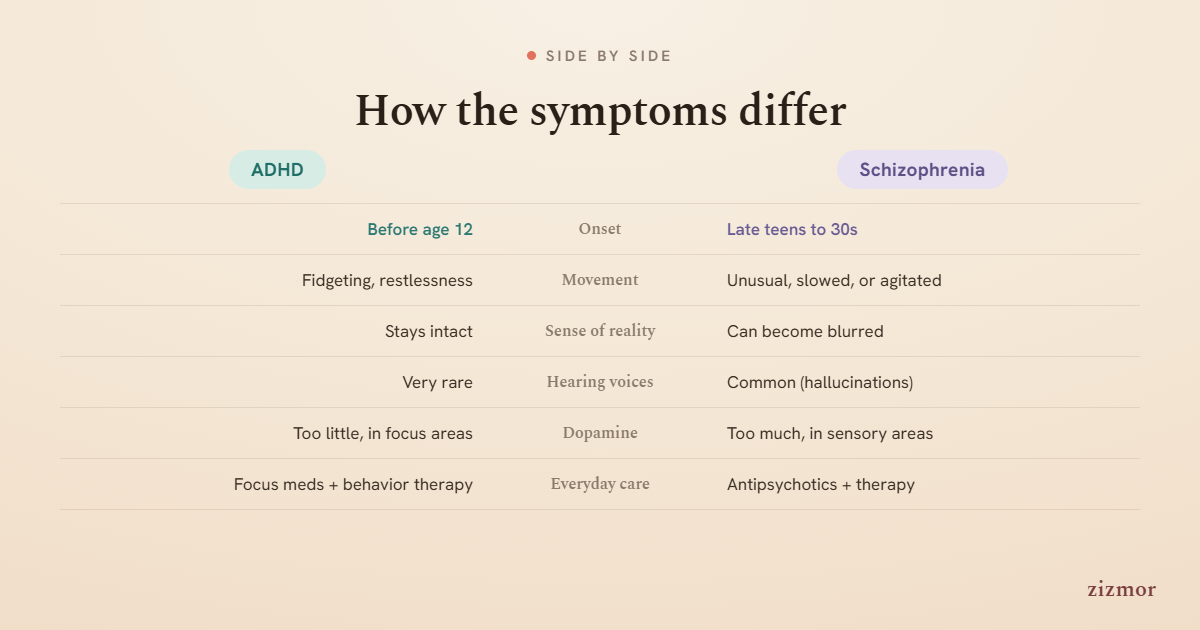
You can see the difference between ADHD and schizophrenia symptoms clearly when you compare how they affect daily life. A child with focus issues might forget their homework or fidget in their seat. A person with the psychotic illness might hear whispers when the room is silent or believe completely untrue things.
To help you quickly see these differences, we made a simple table. It shows how each condition behaves under different metrics.
Why do we see a massive overlap in symptoms between ADHD and schizophrenia in adults?
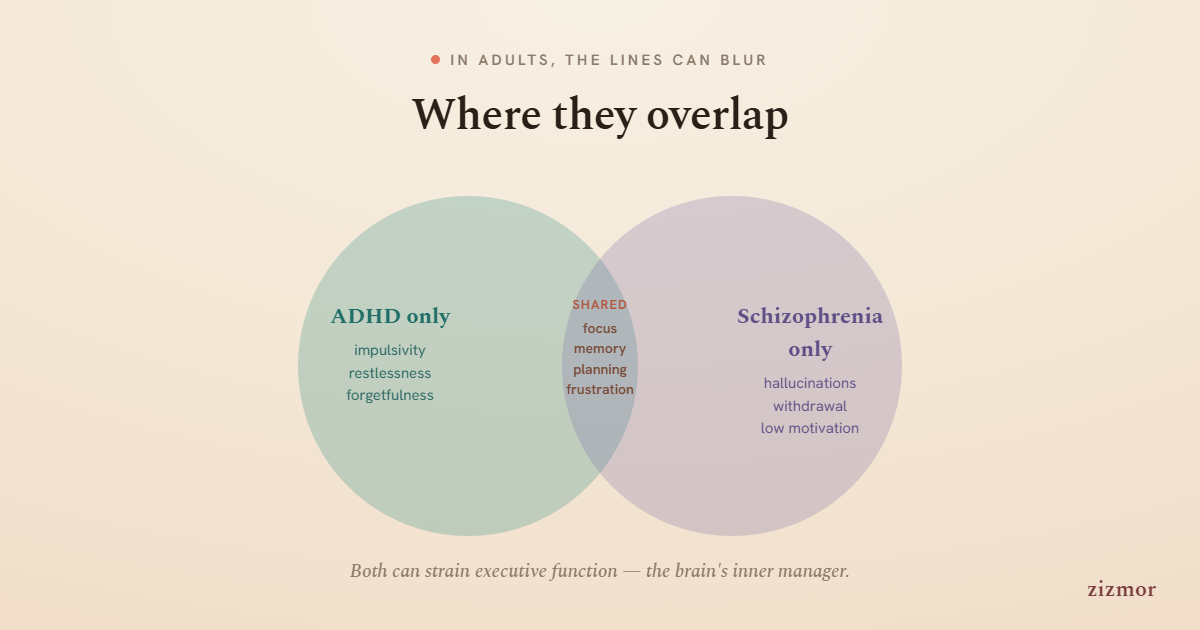
Sometimes it is very hard to tell these two conditions apart in grown-ups. Both conditions can cause severe issues with focus, memory, and planning. Doctors call these skills executive functions. You can think of executive function as the boss of your brain. It helps you organize your day, remember where you put your keys, and keep your temper in check.
When an adult has a weak brain boss, they struggle to get things done. An adult with the first condition might miss appointments, lose their phone, or jump from one half-finished job to another. An adult with the second condition also struggles to concentrate and make decisions. Because of this, we see a huge overlap in symptoms between ADHD and schizophrenia in adults.
Their feelings can also look very similar. Both groups of patients can become angry very quickly, experience constant tension, and have difficulty dealing with frustration. But adults with the second condition also show negative symptoms. These are things that seem to disappear from a person's normal behavior. They might stop showing any feelings on their face. They might stop talking to friends, lose all motivation to take a shower, and pull away from their family.
What are the biggest challenges of differential diagnosis ADHD and schizophrenia?
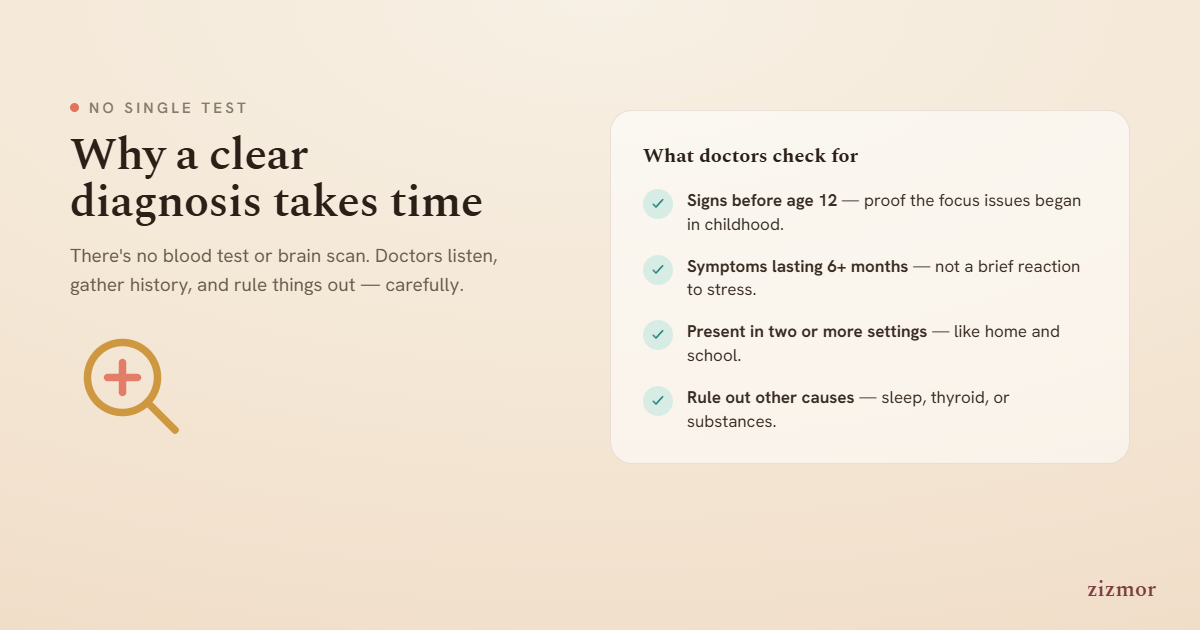
Getting a clear and correct diagnosis is a major test for doctors. There is no quick blood test or brain scan that tells us exactly what is wrong. Instead, doctors must ask many questions and carefully review the DSM-5 symptom lists.
One of the biggest challenges of differential diagnosis between ADHD and schizophrenia is memory. To diagnose the first condition, a doctor must prove that several focus symptoms were present before the patient was 12 years old. Many adults simply cannot remember how they acted when they were little kids. If they do not have old school report cards or parents to talk to, the doctor has a very hard time making a safe choice.
Doctors must also rule out other physical health issues. Problems like not getting enough sleep, thyroid disease, or seizures can make a person look like they have focus issues. Using illegal drugs can also cause a person to hear voices or feel paranoid. A doctor must make sure these external factors are not causing the symptoms.
How does the misdiagnosis of ADHD as early schizophrenia happen?
A major danger in mental health is getting the wrong label. This is a huge risk during the very early stage of the second condition. Doctors call this early stage the prodrome.
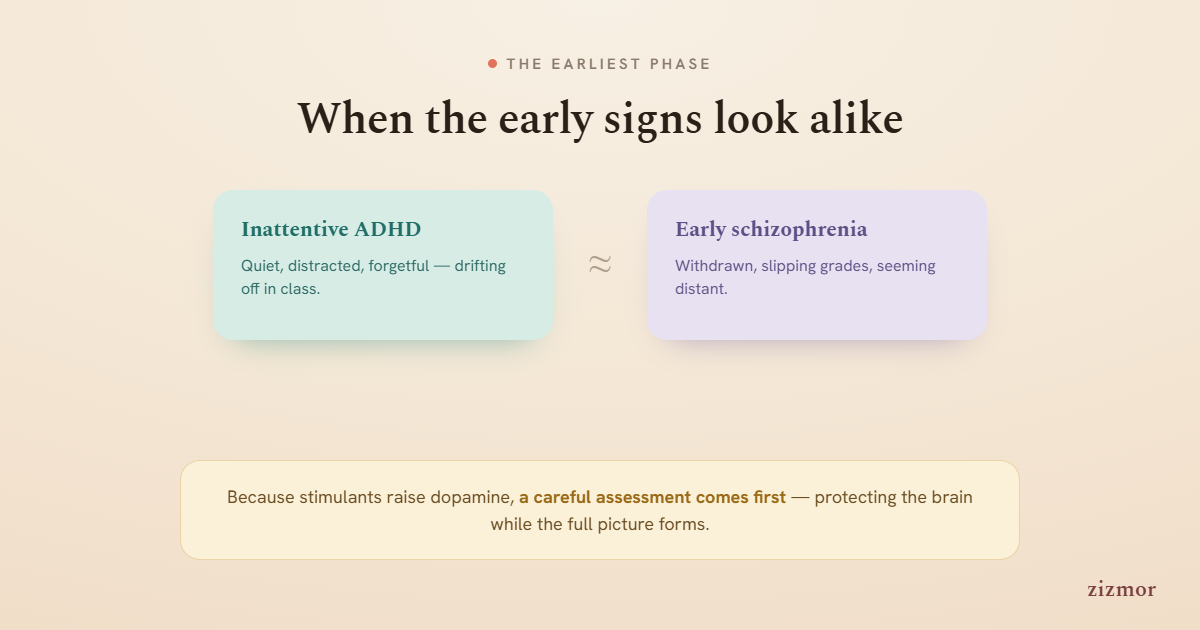
During this early phase, a teenager's brain is just starting to change. They might start getting terrible grades, stop hanging out with their friends, and seem totally distracted. They do not hear loud voices or see strange things yet. Because they look quiet, unfocused, and spaced out, parents and teachers often think it is just the inattentive type of the first condition.
This leads directly to the misdiagnosis of ADHD as early schizophrenia. If a doctor prescribes strong stimulant focus drugs for this distraction, it can cause a terrible emergency. Stimulants work by boosting dopamine in the brain to help you focus. But in a brain that is already starting to develop the second condition, that sudden flood of dopamine can trigger a sudden, frightening psychotic break.
Can you have ADHD and schizophrenia at the same time?
Yes, you can absolutely have both conditions at the same time. Doctors use the term comorbidity to describe a person having more than one illness at once.
While these two conditions seem like opposites in how they affect dopamine, they can exist together in the same head. Scientists used to think they were completely separate, but now we know they are connected.
A massive review of over 1.85 million people found that children with the focus condition are much more likely to face a diagnosis of the psychotic illness when they grow up. If you have other mental struggles alongside your focus issues, your risk of developing the psychotic illness goes up by 2.1 times.
How do doctors handle a comorbidity ADHD and schizophrenia diagnosis?
To make a safe and correct comorbidity ADHD and schizophrenia diagnosis, a doctor must go through a careful checklist. They must prove that the focus issues are a real, separate problem and not just a side effect of the psychosis.
The doctor will interview family members, review childhood medical records, and perform tests. They must also make sure that other medical issues, like thyroid problems or drug use, are not causing the symptoms.
To show you how doctors do this, we put together a simple table of the main diagnostic steps.
What is the impact of ADHD on schizophrenia prognosis?
When a person has both conditions, their long-term path to recovery becomes much more difficult. Doctors use the word prognosis to describe the future outlook or likely course of an illness.
The impact of ADHD on schizophrenia prognosis is heavy and challenging. People with both conditions tend to face much greater difficulties in their daily lives. They are more likely to struggle to find a job, stay in school, and maintain stable housing.
They also run a much higher risk of using alcohol or illegal drugs to cope with their painful symptoms. Using these substances makes their psychotic symptoms much worse, which leads to more emergency room visits and longer stays in the hospital.
What are the shared genetic risk factors for ADHD and schizophrenia?
Our genes are like a massive set of building instructions inside our cells. Scientists now know that both of these conditions share deep roots in our DNA.
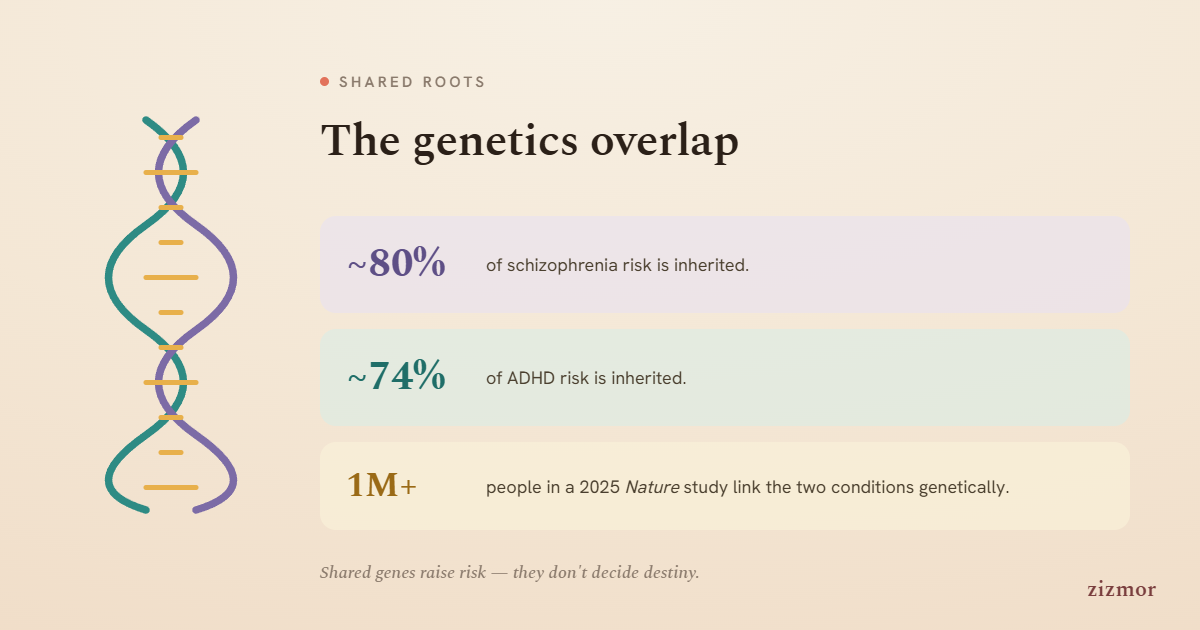
In December 2025, researchers published the largest genetic brain study in history in the journal Nature. They analyzed the DNA of over 1 million people with mental health conditions and 5 million healthy people. They found five main genetic factors that explain most brain illnesses.
The study showed that our genes are highly connected. Scientists use a tool called Mendelian Randomization (MR) to find cause-and-effect links between genes and outcomes. This genetic test proved that having the genes for the focus condition directly increases your risk of developing the psychotic condition by a factor of:
OR = 1.867 (95% CI: 1.260-2.767)
This means the shared genetic risk factors for ADHD and schizophrenia are real and powerful. Twin studies also show that heritability is very high. Schizophrenia has up to an 80% heritability rate, and ADHD has a heritability rate of about 74%. If you have a close family member with the psychotic illness, you are much more likely to have focus issues.
What are the treatment options for co-occurring ADHD and schizophrenia?
Helping a person who has both conditions requires a very careful, step-by-step plan. Doctors cannot treat both issues with equal priority at the very beginning.
The most important rule in these treatment options for co-occurring ADHD and schizophrenia is: treat the psychosis first. This means the medical team must use antipsychotic medicines to calm down the scary hallucinations and delusions before they try to fix the focus issues.
Once the active psychosis is under control, the brain becomes stable. Only then can the doctor assess the patient and see how much the focus issues are still affecting their life. This step-by-step path keeps the patient safe.
How do doctors manage medication for ADHD and schizophrenia concurrently?
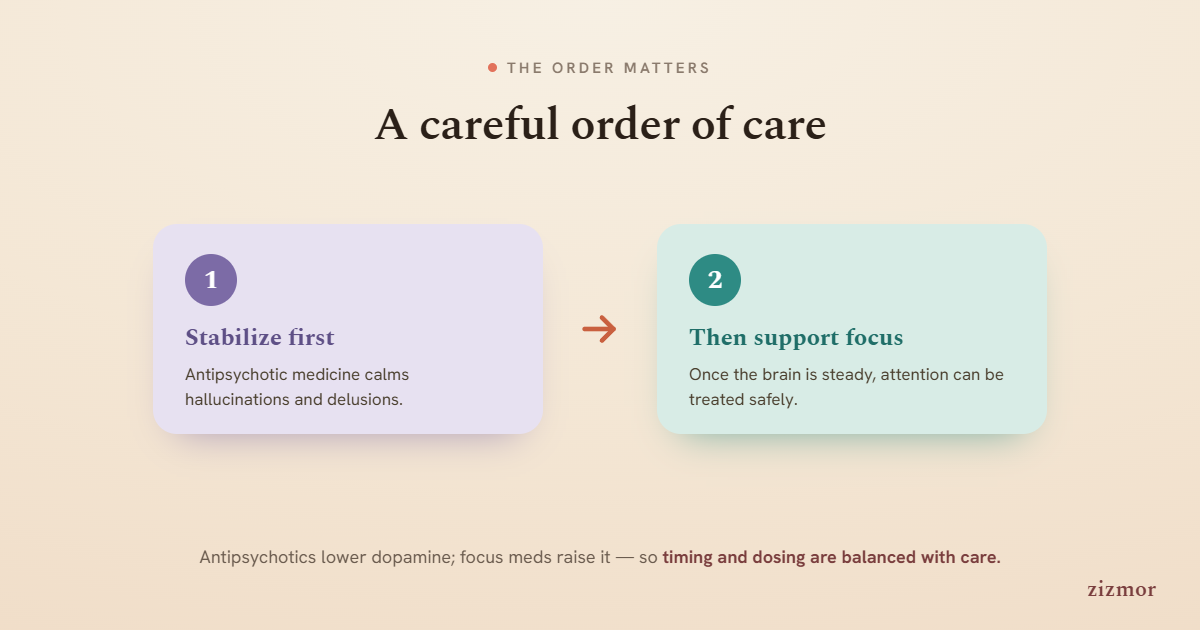
Giving a patient both focus drugs and antipsychotic drugs is a very delicate balancing act. Antipsychotics work by blocking dopamine to calm the brain. Stimulants work by increasing dopamine to help the brain focus. Because they do opposite things, doctors must be extremely careful.
In October 2025, a landmark study examined Swedish health records to assess the safety of these medications when used together. The results were very reassuring for families.
The study found that a focus medicine called lisdexamfetamine is highly safe and actually helps reduce hospital visits. But methylphenidate has a "U-shaped" safety curve. This means low to moderate doses of methylphenidate are safe when used with antipsychotics. Still, very high doses ( less than 95 mg/day) must be avoided because they dramatically increase the risk of a relapse.
Non-stimulant options like atomoxetine are also excellent and safe choices because they do not flood the brain with dopamine.
To help you understand these medication safety profiles, we created a simple comparison table.
We can see from this clinical data that managing medication for ADHD and schizophrenia concurrently is highly successful when doctors follow these safety rules.
What are the best therapy approaches for dual diagnosis ADHD schizophrenia?
Medicines are only one tool in the toolbox. A person facing both conditions also needs specialized therapy to learn how their brain works and how to navigate the world.
One of the best therapy approaches for dual diagnosis ADHD schizophrenia is Cognitive Behavioral Therapy (CBT). CBT is a talking therapy that helps you identify unhelpful or confusing thoughts. Once you catch those bad thoughts, the therapist teaches you how to challenge them and replace them with constructive thinking. This is incredibly helpful for managing anger, frustration, and focus issues.
Another fantastic method is Cognitive Enhancement Therapy (CET). CET uses fun computer games and group exercises to build up your brain's processing speed, working memory, and social communication skills. These exercises act like a gym workout for your brain, helping it grow stronger and more resilient.
What are the most useful coping strategies for ADHD and schizophrenia?
Building structured daily habits is a lifesaver when you are dealing with a dual diagnosis. Simple steps can keep your mind calm and organized throughout a busy day.
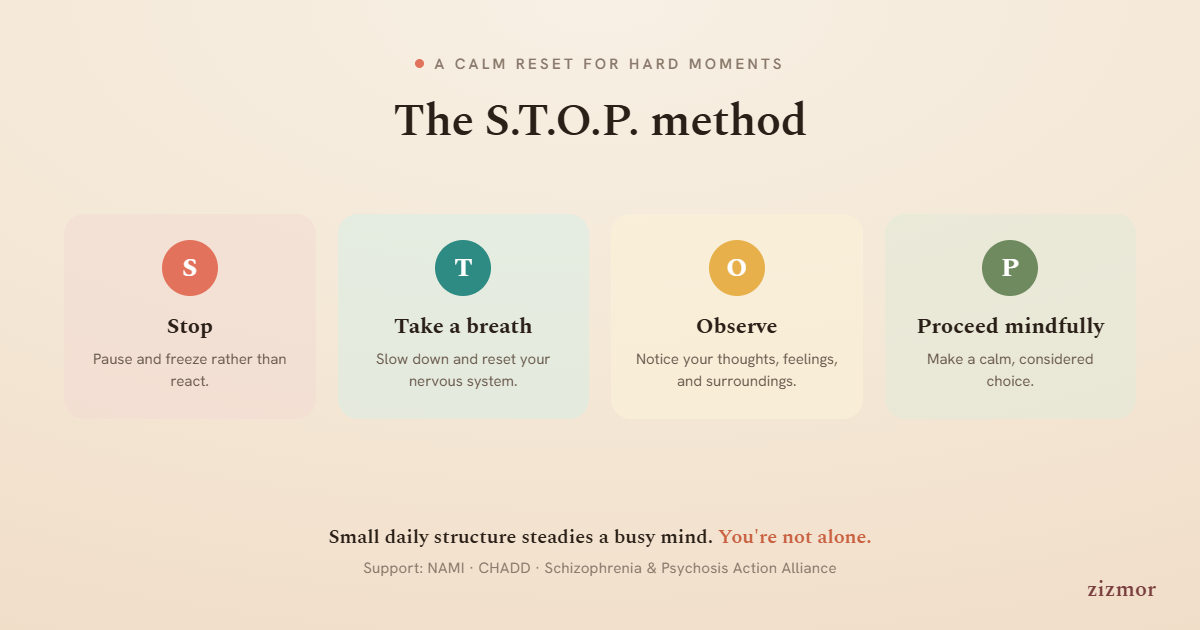
One of the best coping strategies for ADHD and schizophrenia is the STOP method to fight sudden, impulsive choices. When you feel a wave of anger, fear, or a sudden urge to act, you can follow these four steps:
- S - Stop: Pause and freeze rather than react right away.
- T - Take a breath: Slow down and take a deep breath to reset your nervous system.
- O - Observe: Notice your thoughts, your emotions, and what is happening around you.
- P - Proceed mindfully: Make a calm, smart choice.
To get through your daily chores without feeling panicked, you can also use external tools. Alarms, countdown timers, and visual planners make time feel real and tangible. Breaking large, scary tasks into tiny, simple steps also helps your brain feel less overwhelmed.
How can families find support groups for ADHD and schizophrenia patients?
No family should have to walk this difficult path alone. Joining peer groups can give you a life-changing community where you feel completely safe and understood.
We encourage families to reach out to these national organizations for free, confidential help:
- NAMI (National Alliance on Mental Illness): They offer local and online support groups for families and individuals living with severe brain conditions.
- Schizophrenia & Psychosis Action Alliance (S&PAA): This group provides peer-led Zoom calls and phone support groups specifically for those experiencing psychosis.
- CHADD (Children and Adults with ADHD): They have a massive nationwide network of support groups focusing on time management and behavioral coping strategies.
Connecting with these support groups for ADHD and schizophrenia patients ensures you always have a caring shoulder to lean on.
What are the personal stories of people living with ADHD and schizophrenia telling us?
The real experiences of people living with these conditions show that a happy, stable, and productive life is completely possible with the right care.
Many patients describe the incredible relief they felt when they finally got a correct, dual diagnosis. For years, they struggled with taking multiple medications that did not seem to work. But once their doctors treated the psychosis first and carefully balanced their medicines, their focus returned.
By sharing personal stories of living with ADHD and schizophrenia, patients show us the power of routines. They talk about how they learned to use visual timers, practice daily mindfulness, and build strong family support systems. Today, many of these individuals are working, attending school, and enjoying peaceful lives with their families.
Taking Action Today
We wrote this guide to give you the clear, simple facts about ADHD vs. schizophrenia. If you notice these warning signs in your child or a loved one, do not wait for a crisis to hit. Early action is the absolute best way to protect their future brain health.
Dr. Michael J. Zizmor is ready to help you navigate these complex issues, drawing on his 40 years of medical experience. We invite you to visit our main website or read more helpful guides on our blog. You can take control of your family's health today by reaching out for professional support. We are in this together, and we are ready to help you every step of the way.
FAQs
Does childhood general anesthesia cause ADHD?
Yes. Getting put under anesthesia multiple times before age two doubles your child's risk of focus issues. Monitor your child's behavior closely if they had early surgeries. Contact us today to set up a comprehensive brain evaluation.
Is schizophrenia a split personality disorder?
No. It is not a split or multiple personality. It is a severe brain condition that distorts how you see real life. Do not let fear keep you silent. Call our medical clinic today to protect your loved one.
Does ADHD medication directly cause schizophrenia?
No. ADHD stimulants do not cause schizophrenia itself. However, they can trigger a sudden psychotic episode if your child has hidden genes. Stop guessing about drug safety. Call us right now to safely screen your child.
Is schizophrenia identical to bipolar disorder?
No. They are different illnesses, though they share seventy percent of the same genetic signals in the brain. If you suspect these severe brain changes, do not wait. Call our team today to get an accurate clinical plan.
Can you completely cure adult ADHD?
No. There is no permanent cure for this focus condition, but you can successfully manage your daily symptoms. Do not let untreated symptoms ruin your life. Call us right now to build a powerful brain recovery routine.