Everything is a Lot Right Now: A Survival Guide to College Mental Health

Table of Contents
- Why Your College Mental Health Matters More Than Your GPA
- How Can You Fight the Fear? Managing Anxiety in College Students
- How Can You Find Help: How to Find a Therapist on Campus
- What Does Real Pain Look Like? Depression Symptoms in University Students
- How Do You Set Up Your Day? Stress Management Techniques for College Freshmen
- Why Your Phone is a Secret Lifeline: Online Mental Health Support for College Students
- Is Balancing Academics and Mental Well-Being College Life's Hardest Test?
- How Do Screens Steal Your Peace? Impact of Social Media on Student Mental Health
- How Do We Break the Silence? College Mental Health Stigma Solutions
- Why Do You Need a Parents' Guide to College Student Mental Health?
- How to Deal with the Pain: Coping with Homesickness and Mental Health in Collegecoping with Homesickness and Mental Health in College?
- What Are the Best Tools in Your Pocket? Best Apps for College Student Mental Wellness
- How Does Money Hurt Your Brain? Financial Stress and College Student Mental Health
- Why You Are Not Alone: Support Groups for College Students with ADHD
- How Do You Keep Your Battery Full? Preventing Burnout in College Students Mental Health
- Getting Expert Care When Everything is Too Heavy
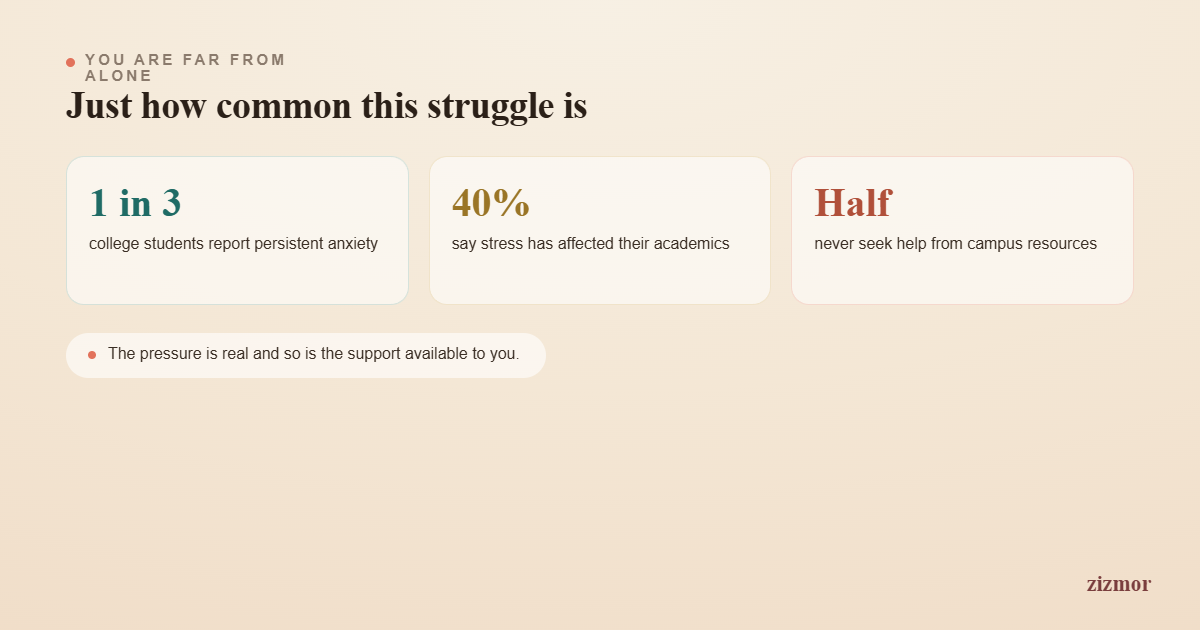
Right now, your classmates are quietly securing the secret keys to survive this semester. They are getting ahead, making friends, and sleeping soundly. Meanwhile, you sit in your dorm room staring at the ceiling, wondering why your chest feels so tight. While you worry, over 60% of students across the country are dealing with at least one major mental health struggle. If you do not act today, you will be left behind in the academic race. You might watch your grades drop, your friendships fade, and your energy vanish. This is not just a passing phase. It is a full-blown crisis of college mental health, and the clock is ticking.
We have spent over 40 years helping students just like you pull themselves out of the dark and find their footing. We know exactly what you are going through, and we are going to show you how to take control of your life starting today.
Why Your College Mental Health Matters More Than Your GPA

You are at school to get a degree. That is the goal. But you cannot learn if your brain is constantly on fire. When your mind is happy and rested, everything else gets easier. You can study better, pass your tests, and make real friends.
To make this happen, you need to know about the tools around you. Every school has a support system built just for you. These are called college mental health resources.
Most campuses have a few main types of support:
- The Counseling Center: This is where you go to talk to a professional counselor or therapist.
- The Academic Success Center: This place offers free tutoring and advice to help you manage your classes.
- The Recreation and Fitness Center: This is where you go to move your body and release stress.
- Student Support Groups: These are student-run clubs where you can talk with others who feel just like you.
Using these tools early keeps small problems from turning into huge crises. You do not have to wait until you are failing your classes to reach out.
How Can You Fight Fear? Managing Anxiety in College Students
Anxiety is a physical feeling. Your heart beats fast, your breathing gets short, and your palms sweat. This is your body's natural fight-or-flight response. It is meant to protect you from wild animals. But when you feel it during a history quiz, your body gets confused.
We have spent years teaching people how to handle this feeling. When it comes to managing anxiety in college students, you need simple tools that work in the moment.
One of the best tools is a breathing pattern called 4-4-4 breathing:
Inhale for 4 seconds \Hold for 4 seconds \Exhale for 4 seconds \Hold for 4 seconds
This slow breathing pattern acts like a brake pedal on a runaway car. It tells your brain that you are safe. It slows your heart down. You can practice this right at your desk during a test.
Also, you can try to talk back to your scary thoughts. When your mind says you are going to fail and ruin your whole life, stop and ask if that is really true. Usually, it is just the anxiety talking.
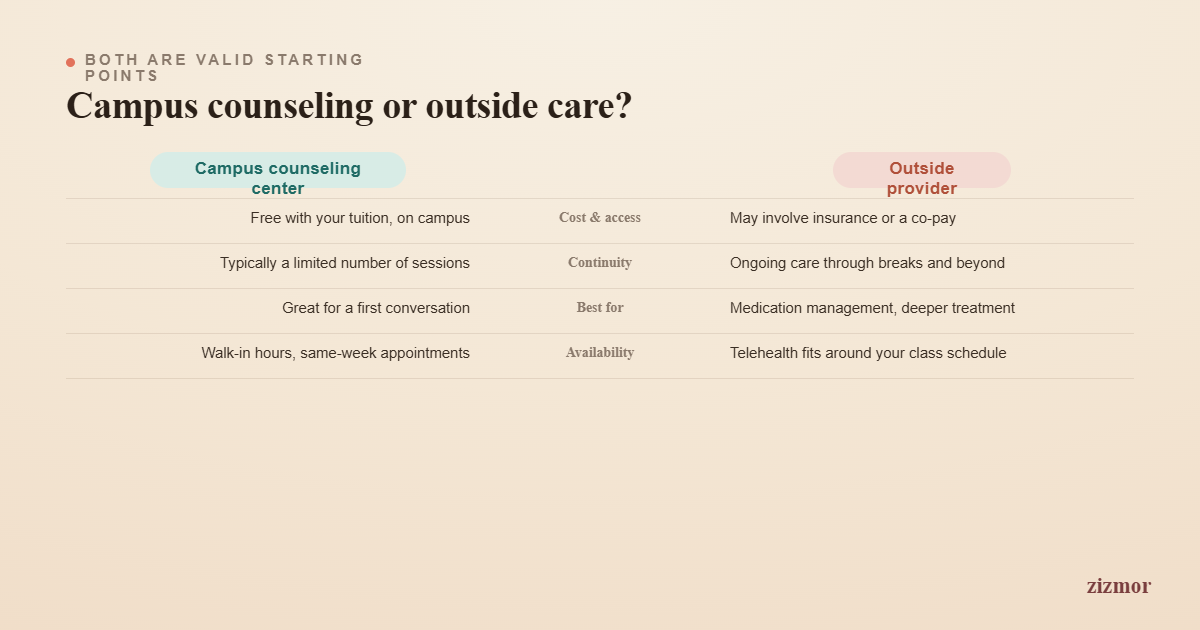
How Can You Find Help: How to Find a Therapist on Campus
Seeking help is a sign of strength. But many students do not know how to start the process.
If you are wondering how to find a therapist on campus, the steps are very simple.
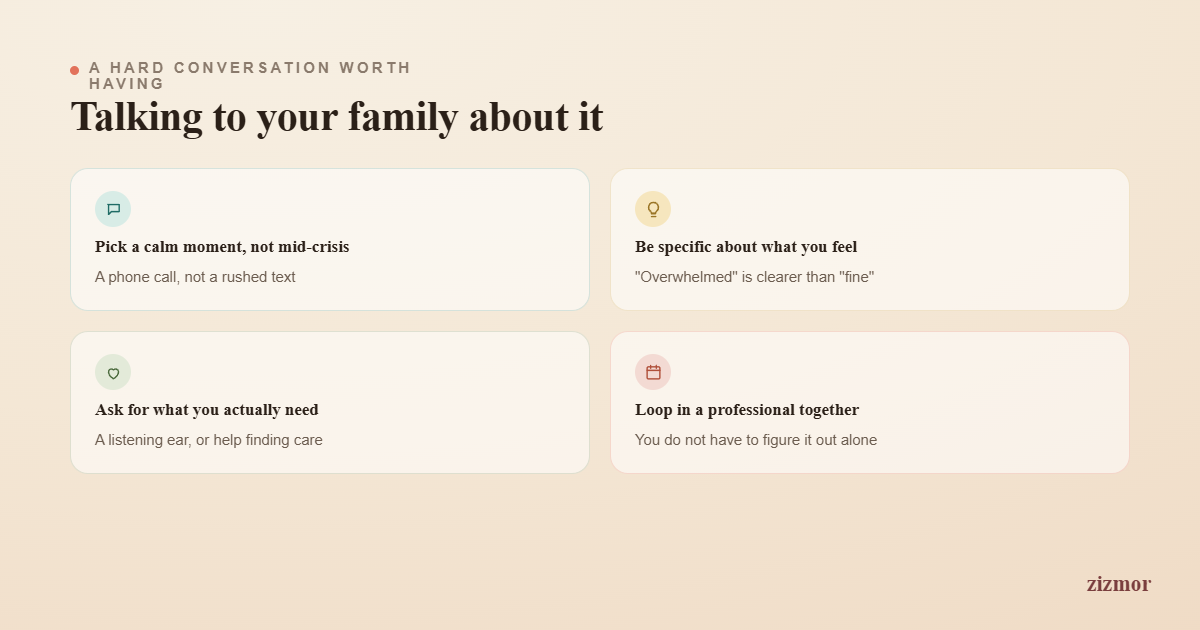
First, open your laptop and go to your university's student health or wellness website. Look for the tab that says counseling or mental health.
Second, fill out their brief online form. This is a secure form.
Third, go in for a short screening chat. This is a quick talk with a professional who will listen to your concerns and help you choose the best plan.
Here is the path to your care:
[Open School Wellness Site] │ ▼ [Fill Out Private Form] │ ▼ [Have a Brief Chat] │ ▼ [Get Your Care Plan]
You might worry that your parents or your teachers will find out. Under privacy laws, everything you say to a therapist is kept confidential. No one can see your files unless you sign a paper saying it is okay.
What Does Real Pain Look Like? Depression Symptoms in University Students
Sometimes the sadness goes deeper than just having a bad day. Depression is a real medical issue. It makes your body and mind feel heavy.
You need to know the depression symptoms in university students so you can spot them in yourself or your friends.
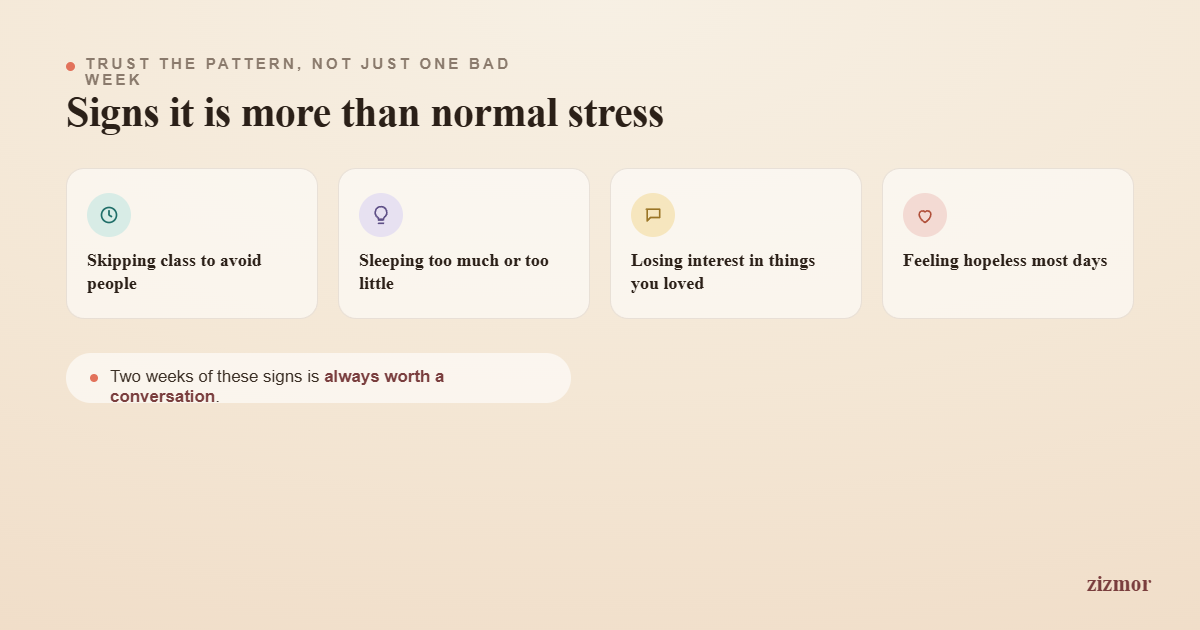
Look out for these changes:
- You feel sad or empty: You cry for no clear reason, or you feel numb inside.
- You lose interest in fun: You do not want to play games, hang out, or pursue hobbies you used to love.
- Your sleep changes: you sleep all day or stay awake staring at the wall all night.
- Your body feels tired: You have no energy, and even taking a shower feels like climbing a mountain.
- You shut people out: You stop replying to texts and stay in your room with the lights off.
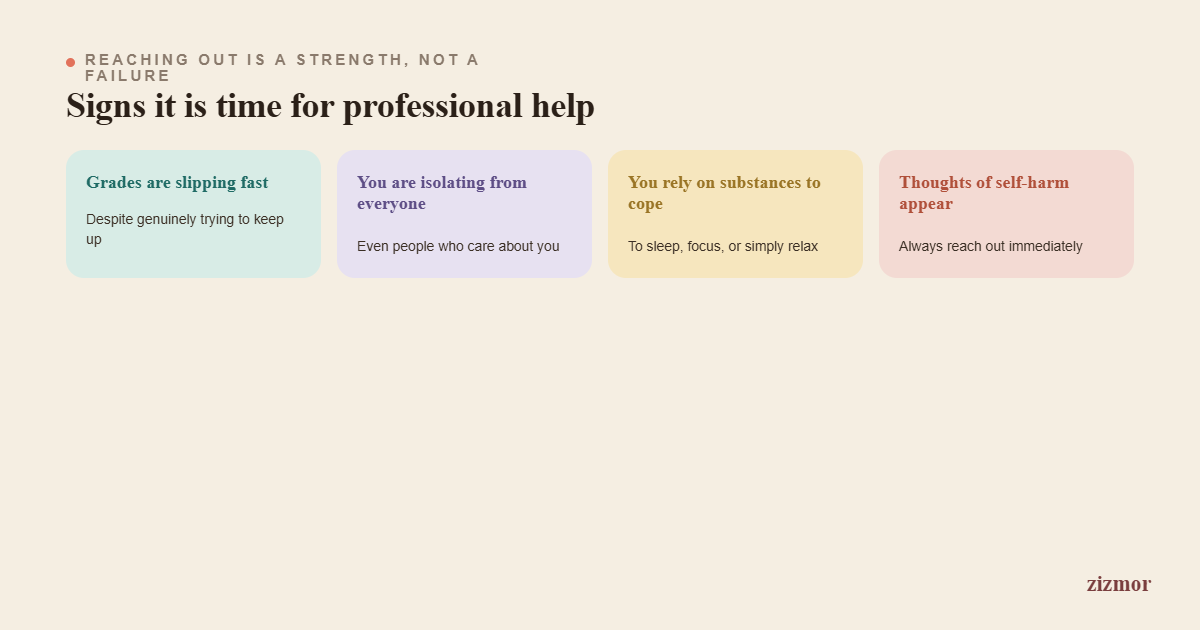
If you feel this way for more than two weeks, it is time to get help. These are not signs of being lazy. They are signals from your brain that you need some care.
How Do You Set Up Your Day? Stress Management Techniques for College Freshmen
Your first year of college is a massive shift. You have to manage your own time, cook your own food, and make new friends all at once. It is very easy to feel overwhelmed.
To survive, you need practical stress management techniques for college freshmen.
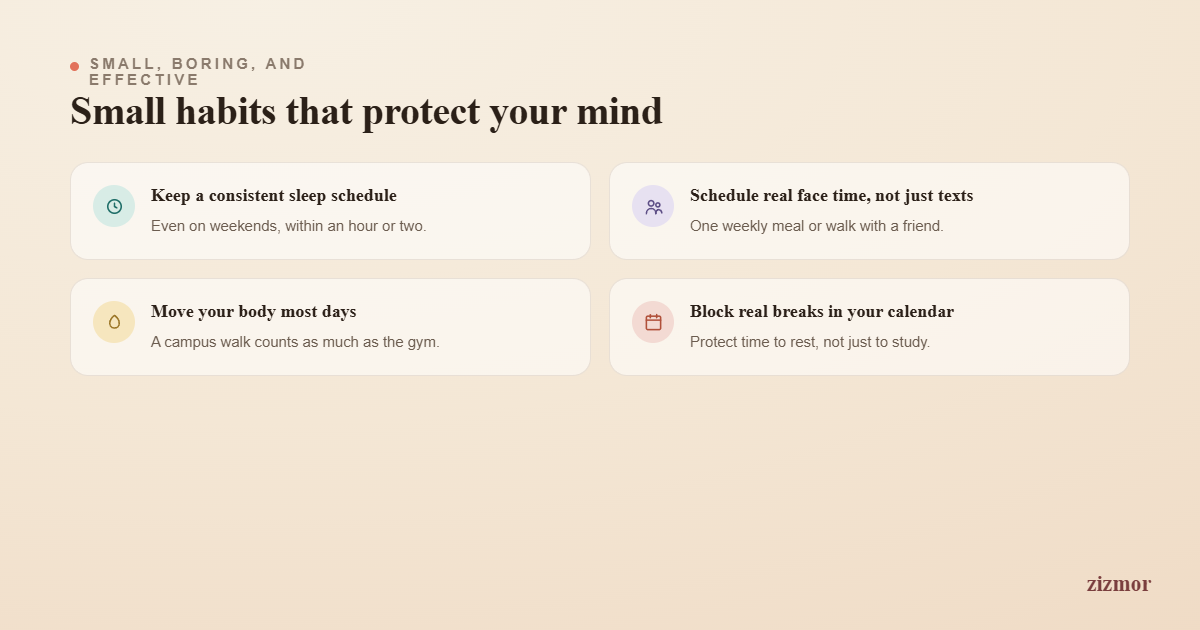
First, try time-blocking. This means you write down exactly when you will study, eat, and sleep.
Second, set a strict wake-up time. Getting up at the same hour every morning stabilizes your sleep patterns and keeps your mood steady.
Third, watch your caffeine intake. Drinking energy drinks or coffee late in the day will make your heart race and ruin your sleep.
Fourth, take short active breaks. Walking outside for ten minutes between classes releases natural happy chemicals in your body.
Why Your Phone is a Secret Lifeline: Online Mental Health Support for College Students
Sometimes the campus clinic has a long waiting list. Or maybe you feel too anxious to walk into a building and talk to a stranger.
You can use online mental health support for college students to get help from your own room.
Recent studies show that using phone apps with live text coaches can help you feel better. Researchers found that students who used text-coaching therapy apps reported far fewer symptoms of depression and anxiety. They were also much more likely to stay healthy over two years.
Texting a coach is easy. You can do it between classes or while sitting in the dining hall.
If you ever feel in danger or unable to cope, you can call or text 988. It is free, private, and open at any time of the night.
Is Balancing Academics and Mental Well-Being College Life's Hardest Test?
Many students think they have to suffer to get good grades. They stay up all night, skip meals, and ignore their feelings. This is a trap.
If you do not prioritize balancing academics and mental well-being, college will become a nightmare of exhaustion.
Look at the difference between these two paths:
Think of your brain like a phone battery. You cannot run it on 1% and expect it to work fast. You have to plug it in and let it rest.
How Do Screens Steal Your Peace? Impact of Social Media on Student Mental Health
Your phone is great for staying in touch with your family. But it can also make you feel bad about yourself.
The impact of social media on student mental health is a huge issue today.
When you scroll through your feed, you see photos of people at parties, looking perfect and having fun. Your brain starts to make negative comparisons. You think everyone is happy while you are sitting alone in your room.
This is not real life. It is just a highlight reel.
Also, using your phone late at night exposes your eyes to blue light. This light tricks your brain into thinking it is daytime, making it very hard to fall asleep.
How Do We Break the Silence? College Mental Health Stigma Solutions
Why do so many students suffer without telling anyone? Nearly half of those who struggle with their emotions do not seek treatment. They are afraid of being judged. They think people will see them as weak or broken.
This is why we need college mental health stigma solutions on every campus.
One of the best solutions is peer support. Programs like Active Minds are student-run clubs that talk openly about mental health. When students share their stories, they show others that it is okay to struggle.
Schools can also help by making screenings easy and training staff to recognize signs of distress. When teachers, librarians, and coaches know how to guide students to help one another, the campus becomes a safer place for everyone.
Why Do You Need a Parents' Guide to College Student Mental Health?
When your child goes to college, your relationship changes. You cannot manage their schedules anymore. But you can still be their anchor.
If you are a parent, this parents' guide to college student mental health will help you support them from afar:
- Listen without fixing: When they call you crying about a hard test, do not rush to solve the problem. Ask them what they think they should do. This builds their confidence.
- Normalize the struggles: Tell them that failing a quiz or feeling lonely is a normal part of growing up.
- Watch for behavioral shifts: Pay attention if they stop texting you, sound extremely tired, or express deep feelings of hopelessness.
- Coordinate a care plan: If they already see a therapist, ensure they have a local or virtual provider in place before their first day of classes.
Your job is to show them that you love them no matter what grades they bring home.
How to Deal with the Pain: Coping with Homesickness and Mental Health in College?
Missing your home is a very real, physical pain. You might miss your parents, your dog, or the quiet of your old room. This feeling of displacement can drain your emotional energy.
If you are currently looking for coping with homesickness and mental health in college, coping with homesickness and mental health in college, we want you to know that these feelings do pass.
You can build a sense of belonging with simple actions:
- Bring familiar items: Keep photos of your family on your desk or use your favorite blanket from home.
- Create micro-routines: Find a local coffee shop or a park bench and go there at the exact same time every week.
- Get out of your dorm room: Walk down to the lounge, join a campus club, or go to a student event.
It takes about thirty days to build a new habit and feel comfortable in a new place. Give yourself time to adjust.
What Are the Best Tools in Your Pocket? Best Apps for College Student Mental Wellness
Your phone does not have to be a source of stress. It can be a powerful tool for your wellness.
Here are the best apps for college student mental wellness that you can download today:
- Calm: This app has beautiful nature scenes and sounds to help you sleep, relax, and breathe.
- Headspace: It offers short guided meditations that are perfect for calming your mind before a hard test.
- Gratitude: A simple, clean app where you write down the positive things that happened in your day.
- Moodfit: This tool helps you track your daily mood and see what actions make you feel better.
- Calm Harm: A specialized app designed to help you resist the urge to self-harm by offering safe distractions.
These apps are easy to use between classes or while waiting for dinner.
How Does Money Hurt Your Brain? Financial Stress and College Student Mental Health
College is expensive. The cost of tuition, housing, and books can create a constant background noise of worry in your mind.
The connection between financial stress and college student mental health is deep and real.
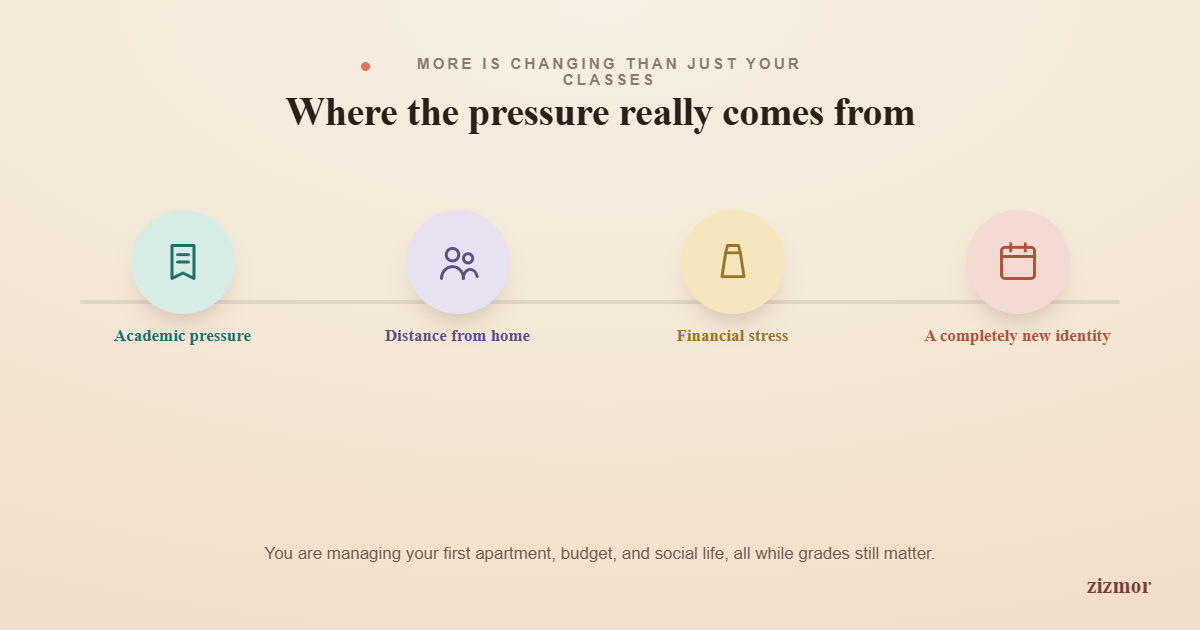
When you worry about money, you might feel forced to work extra hours at a part-time job. This leaves you with less time to sleep, study, and see friends. You might feel trapped, exhausted, and isolated.
Remember that many colleges have emergency funds, food pantries, and financial advisors to help you manage your budget. You do not have to carry this heavy load all by yourself. Talk to an advisor at your school's success center.
Why You Are Not Alone: Support Groups for College Students with ADHD
Managing your time in college requires considerable executive control. Without parents checking on your homework, staying focused can feel almost impossible. This is especially true if you are neurodivergent.
Utilizing support groups for college students with ADHD can change your entire academic journey.
These groups bring together students who face the exact same challenges. You can share real-life tips on how to study, organize your notes, and stay on task without getting distracted.
Also, it is a safe space where you do not have to pretend to be someone else. You can talk about your struggles with people who really understand how your brain works.
How Do You Keep Your Battery Full? Preventing Burnout in College Students' Mental Health
Burnout happens when you push yourself too hard for too long without resting. It leaves you feeling completely empty, cynical, and too tired to care about your classes.
Focusing on preventing burnout in college students' mental health is essential for your success and happiness.
You can protect your battery with a few simple habits:
- Learn to say no: You do not have to join every single student group or go to every social event.
- Batch your tasks: Break big research papers into small, simple steps and study in short blocks of time.
- Protect your sleep: Keep your bed as a sacred place for sleep, not for studying or eating.
- Take real breaks: Step away from your computer screen, go outside, and look at the trees.
Taking care of your mind is not extra. It is the foundation of everything you do at school.
Getting Expert Care When Everything is Too Heavy
Sometimes, self-care routines, campus resources, and mobile apps are not enough to lift the heavy weight. When your feelings get in the way of your ability to eat, sleep, study, or enjoy your life, reaching out to a professional is the bravest step you can take.
We write this guide with the trusted, real-world experience of Dr. Michael J. Zizmor. He is a mental health physician licensed to practice medicine in California (Physician's and Surgeon's License G50848, NPI 1124395421) who has spent over forty years helping people understand their minds. Dr. Zizmor started his path at the University of California, Berkeley, where he earned his undergraduate degree in Psychology.
He then went to the University of Kansas School of Medicine to earn his medical doctorate. He completed his clinical internship at Boston University-affiliated hospitals and began psychiatric residency training at St. Elizabeths Hospital in Washington, DC; he is not board-certified in psychiatry. Dr. Zizmor believes that understanding how your mind works is the first step toward feeling better, and he's here to help you look at the facts clearly.
If you are ready to get support for your college mental health, we are here to walk with you. You do not have to carry this heavy load alone. Reach out today to start your path toward a brighter, healthier future.
FAQs
Will your professors see therapy files?
No, your private files stay completely locked away under strict federal laws. No teacher, advisor, or parent can ever touch them without your written signature. Do not let fear hold you back. Schedule your intake appointment right now.
Can you get accommodations for anxiety?
Yes, your school must give you academic breaks and extra test time if anxiety stops you from learning. Stop suffering in silence while your grades drop. Walk into your campus disability office and claim your academic support today.
Are wellness apps always completely safe?
No, some unregulated apps use untested artificial intelligence that can give you wrong or harmful advice. Do not trust your mental health to random robots. Stick to proven wellness apps or talk to our team for safe care.
Does physical exercise cure severe depression?
No, while moving your body releases happy chemicals, severe depression requires professional medical treatment to heal your brain. Do not try to run away from clinical pain alone. Call our expert team and book your telehealth visit today.
Can roommate drama break your mind?
Yes, constant toxic stress at home triggers deep anxiety and keeps your nervous system in survival mode. Do not let a bad living situation ruin your college semester. Speak to campus housing or our medical group right now.