Understanding Depression: More Than Just "The Blues"
Table of Contents
- Is It Sadness or Something Deeper?
- How Does This Condition Hide in Plain Sight?
- What Happens When Life Changes Suddenly?
- How Can You Take Action and Heal?
- What Can You Do at Home Right Now?
- How Can We Support the People We Love?
- Conclusion
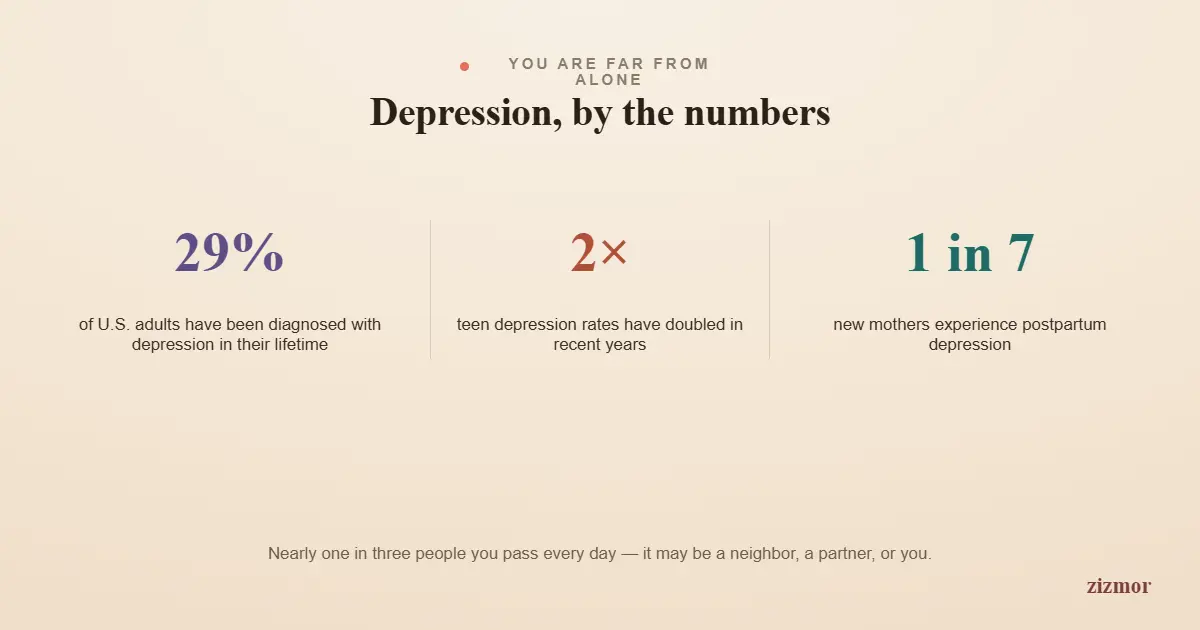
Right now, 29% of American adults have received a depression diagnosis in their lifetime. Let that number sink in for a second. That is nearly one in three people you see every single day. It might be the friendly neighbor who waves to you. It might be your partner sitting next to you on the couch. It might be the person looking back at you in the mirror. If you wait to take action, you risk losing your career, your family, and your peace of mind. The clock is ticking, and these numbers are climbing fast. Young adults and women are facing the absolute worst of this crisis. You cannot afford to look the other way any longer.
We write this guide with the trusted, real-world experience of Dr. Michael J. Zizmor. He is a mental health physician licensed to practice medicine in California (Physician's and Surgeon's License G50848, NPI 1124395421) who has spent over forty years helping people understand their minds. Dr. Zizmor started his path at the University of California, Berkeley, where he earned his undergraduate degree in Psychology.
He then went to the University of Kansas School of Medicine to earn his medical doctorate. He completed his clinical internship at Boston University-affiliated hospitals and began psychiatric residency training at St. Elizabeths Hospital in Washington, DC; he is not board-certified in psychiatry. Dr. Zizmor believes that understanding how your mind works is the first step toward feeling better, and he's here to help you look at the facts clearly.
Is It Sadness or Something Deeper?
We all have bad days. But you must know the difference between depression and sadness to protect your health.
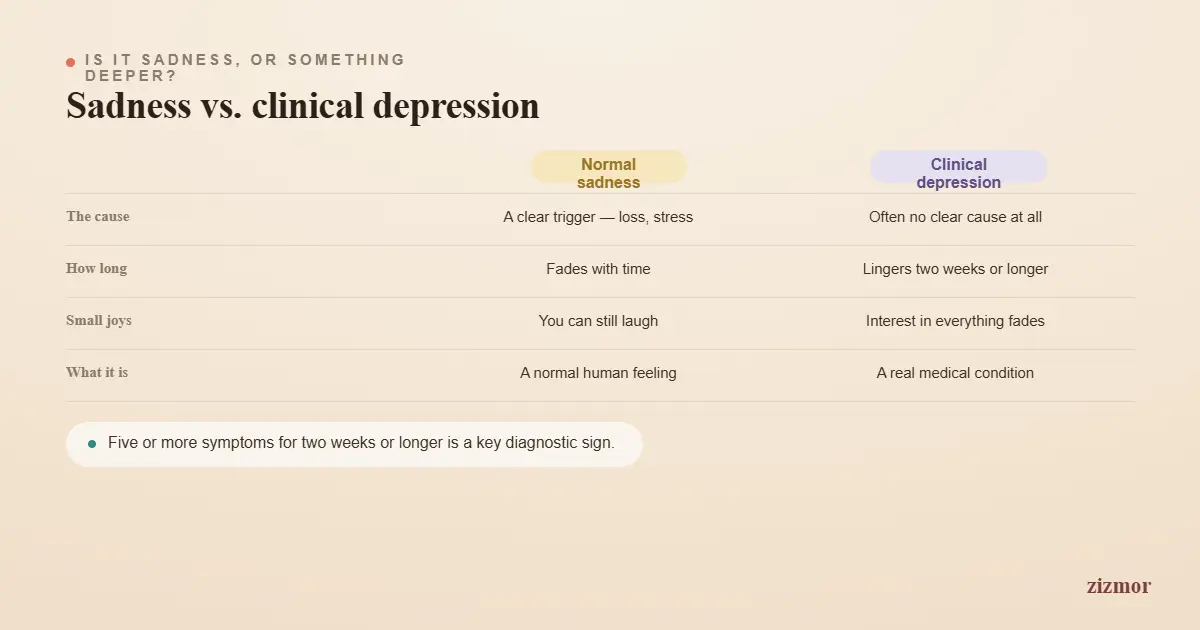
Sadness is a normal human feeling. You feel sad when you lose a job, a friend, or a pet. This feeling has a clear cause. It fluctuates and fades with time. You can still enjoy small moments. You can still laugh at a joke with your friends.
This illness is different. It is a real medical condition. It does not just go away because you want it to. It stays with you for two weeks or longer.
This condition affects your entire body and your mind. It drains your energy. It ruins your sleep. It makes you lose interest in everything you used to love.
The American Psychiatric Association has clear rules for a diagnosis. You must have five or more symptoms for at least two weeks. These symptoms must affect your daily life. You might feel hopeless, tired, or angry.
Do you feel like you are walking through thick mud every day? If you feel sad most of the day, every day, you might have clinical depression. Recognizing this is the first step to getting your life back.
How Does This Condition Hide in Plain Sight?
This illness does not always look like crying in a dark room. It can wear a smiling face and hide behind a busy schedule.
What are the symptoms of high functioning depression?
Some people go to work every day. They get good grades. They smile at parties. But they are still suffering inside.
This is often called high functioning depression. Doctors call it persistent depressive disorder or dysthymia.
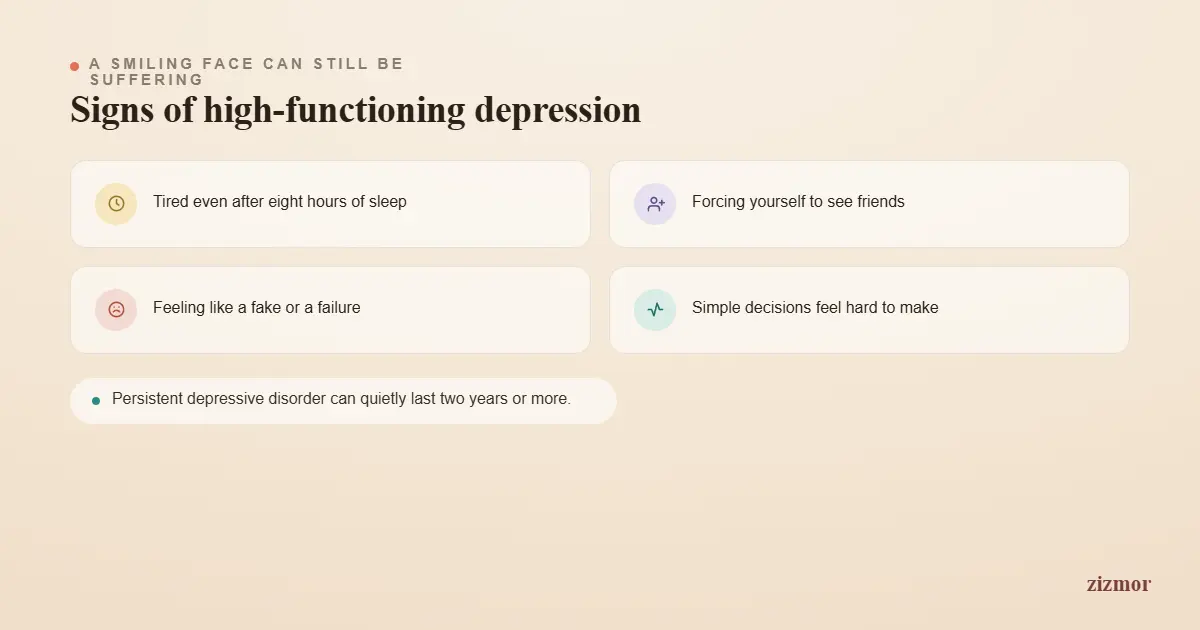
This is a long-term condition. It lasts for two years or more in adults.
The symptoms of high functioning depression are less intense than major depression, but they last much longer. You might feel a constant low mood. You might have low self-esteem. You might feel like you are just getting by.
You do your chores, but you feel no joy. Small tasks take a lot of effort. People around you might think you are doing fine. But inside, you feel empty and alone.
Here is a quick look at what this looks like:
- You feel tired even after sleeping eight hours.
- You force yourself to hang out with friends.
- You feel like a fake or a failure.
- You have a hard time making simple decisions.
What are the signs of depression in teenagers?
Teenagers face unique pressures today. Their symptoms can look different from adults.
They might not seem sad. Instead, they might seem very angry or irritable.
You should watch for sudden changes in their behavior. Look for a drop in their school grades. Watch if they stop talking to their friends.
They might sleep all day or stay up all night. They might complain of headaches or stomach aches that do not go away.
We must pay close attention to our kids. Teen depression is rising at an alarming rate. Gallup news shows that rates for young people have doubled recently.
Look for these signs of depression in teenagers:
- Sudden loss of interest in hobbies or sports.
- Talking about feeling worthless or hopeless.
- Changes in eating habits, like skipping meals.
- Giving away favorite belongings.
How does the impact of social media on teenage depression show up?
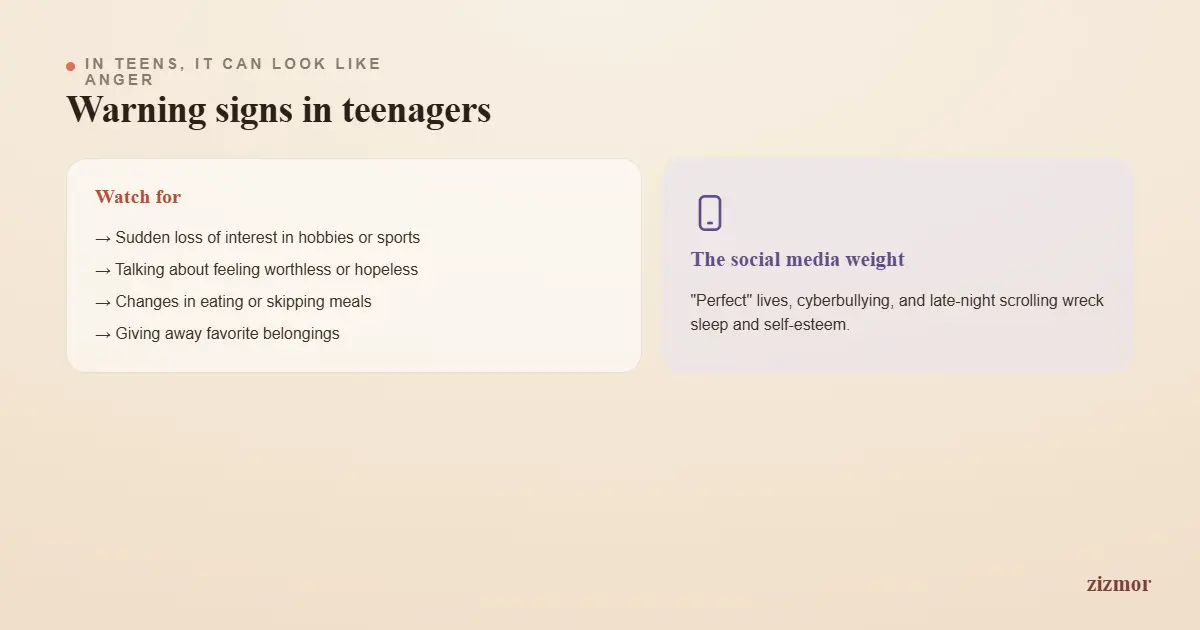
Social media plays a massive role in our kids' lives. The impact of social media on teenage depression is a major concern for parents.
Teens spend hours looking at screens. They see perfect lives and perfect bodies. This makes them feel like they are not good enough.
Cyberbullying also happens on these platforms. This can destroy a teen's self-esteem.
They also stay up late scrolling. This ruins their sleep. Lack of sleep makes mood disorders much worse. We need to help them set healthy screen limits.
What Happens When Life Changes Suddenly?
Sometimes, life changes or seasonal shifts trigger deep changes in our mood.
How can you tell the difference in understanding seasonal affective disorder vs depression?
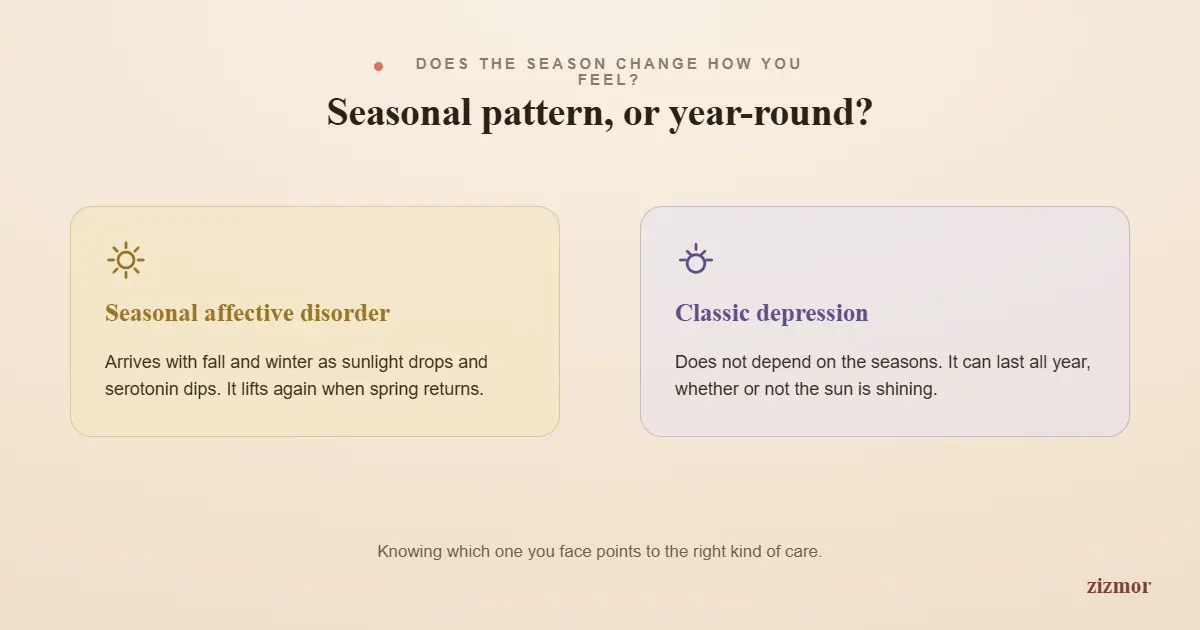
The weather can have a big effect on how you feel. We need to look at understanding seasonal affective disorder vs depression to understand this link.
Seasonal affective disorder is a type of depression. It happens at the same time every year. It usually starts in the fall and winter.
When the days get shorter, you get less sunlight. Your brain produces less serotonin. This makes you feel tired. You might crave heavy carbs and gain weight.
When spring comes, these feelings go away.
But classic depression is different. It does not depend on the seasons. It can last all year long. It does not care if the sun is shining.
What is the best therapy for postpartum depression?
Having a baby is a major life change. It brings a mix of joy and deep stress.
Many new moms get the "baby blues". This affects up to 85% of new mothers. You might cry for no reason or feel worried. This is normal. It goes away in about two weeks.
Postpartum depression is different. It is much more severe and lasts longer. It affects up to 1 in 7 women.
You might feel like you cannot connect with your baby. You might feel like a bad mother.
What is the best therapy for postpartum depression? Talk therapy is a highly effective treatment.
Cognitive behavioral therapy is a top choice. It helps you change negative thought patterns.
Interpersonal therapy is also excellent. It helps you adjust to your new role as a parent. These therapies can help you feel like yourself again.
How Can You Take Action and Heal?
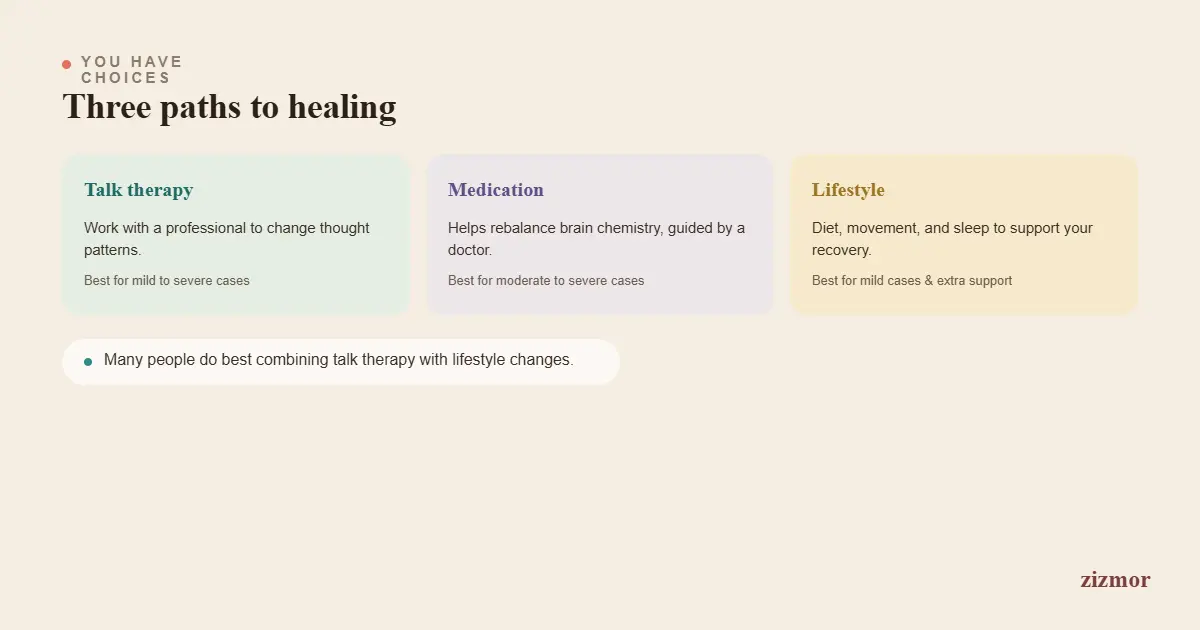
You have many paths to healing. Let us look at your choices.
We can compare your choices to help you decide. Here is a simple table to help with your depression treatment options comparison:
This comparison shows that you have choices. You do not have to rely on just one method. Many people get the best results by mixing talk therapy with lifestyle changes.
What should you know about medication side effects for depression?
Pills can help balance your brain chemistry. But they are not always simple.
You need to understand medication side effects for depression before you start.
Some people experience headaches or nausea in the first few weeks. Others might have trouble sleeping. Some feel tired all the time.
You might also experience weight gain or sexual issues.
Never stop taking your pills suddenly. Doing this can make you very sick. It can make your mood crash. Always talk to your doctor before making changes.
How do you talk to your doctor about depression?
Opening up about your feelings can be scary. But a good doctor is there to listen, not to judge.
Here is how to talk to your doctor about depression.
First, write down your symptoms before your visit. Note when you feel worst. Note how your sleep has changed.
Second, be totally honest. Tell them if you feel hopeless or angry. Tell them if you are using alcohol to cope.
Third, bring a trusted friend or family member if you feel nervous. They can help you remember what to say.
We invite you to reach out to us. Dr. Zizmor listens closely and works with you to find the right path.
What Can You Do at Home Right Now?
You do not have to wait for an appointment to start feeling better. You can make simple changes today.
Is exercise good for depression?
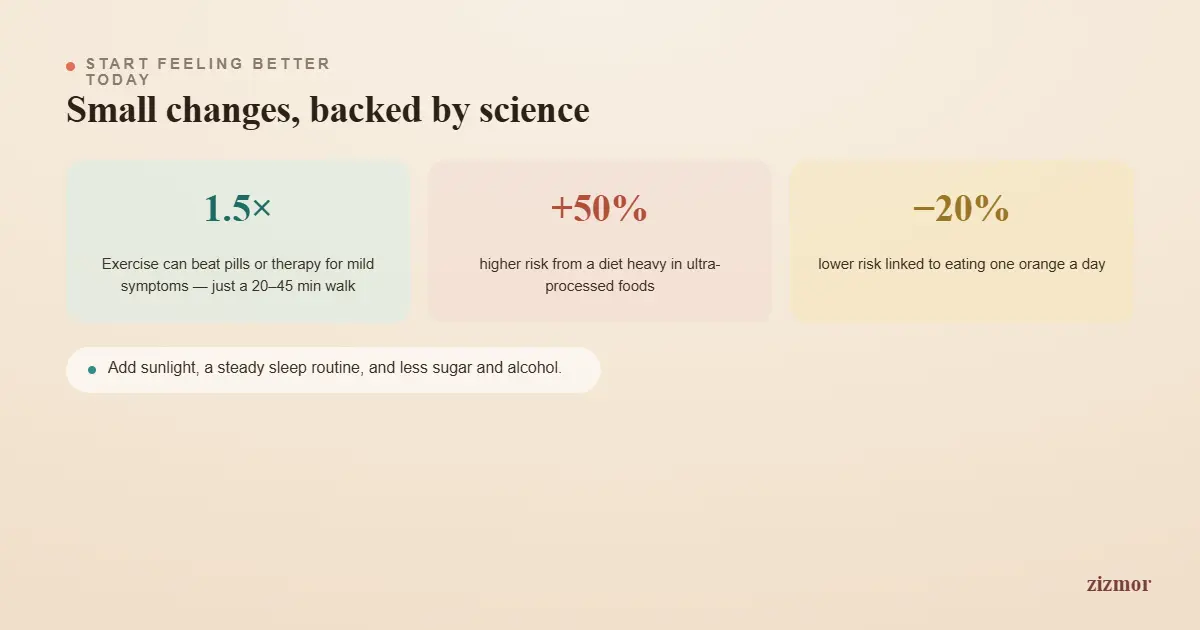
You might wonder if moving your body really helps your mind. Yes, is exercise good for depression? The science says yes.
The British Journal of Sports Medicine looked at over 97 reviews with 128,000 participants.
The study showed that physical activity is highly beneficial. It can be 1.5 times more effective than pills or talk therapy for mild symptoms.
You do not need to run a marathon. Just walking 20 to 45 minutes a day helps a lot.
Exercise releases endorphins in your brain. These are your body's natural feel-good chemicals. It also helps lower stress. Start small with a short walk today.
Can diet affect depression symptoms?
What you put on your plate affects how your brain works. So, can diet affect depression symptoms? Yes, it can.
Harvard researchers studied over 31,000 women.
They found that eating high amounts of ultra-processed foods increases your risk of depression by 50%.
Packaged snacks, soda, and artificial sweeteners can harm your gut health. Your gut makes most of your body's serotonin.
Harvard scientists also found that eating one orange a day can reduce your risk of depression by 20%.
Eating a Mediterranean diet rich in vegetables, fish, and nuts is a great way to boost your mood.
What are some natural remedies for mild depression?
If your symptoms are not severe, you can try simple home habits.
These natural remedies for mild depression can support your recovery.
First, get enough sunlight. Sun exposure helps your body make Vitamin D. This boosts your mood.
Second, build a regular sleep routine. Go to bed at the same time every night. Avoid screens before bed.
Third, try deep breathing or meditation. These habits calm your nervous system.
Fourth, cut down on sugar and alcohol. Alcohol is a depressant and makes you feel worse later.
How Can We Support the People We Love?
We are social creatures. We need each other to heal.
How do you help a friend with depression?
Watching someone you care about suffer is hard. You might not know what to say.
Here is how to help a friend with depression.
First, do not tell them to "just snap out of it". Do not tell them to "think positive". This makes them feel lonely and misunderstood.
Second, listen without trying to fix everything. Just say: "I am here for you". Or say: "I have noticed you seem quiet lately".
Third, offer practical help. Bring them a meal. Offer to walk their dog.
Fourth, help them find professional care. You can offer to search for a doctor or go with them to their visit.
Why join online support groups for depression?
Talking to people who have the same struggles can change your life.
Online support groups for depression are a safe place to share your story.
You do not have to leave your house. You can connect with others anytime.
Hearing how other people cope can give you hope. You realize you are not the only one feeling empty.
These groups do not replace a doctor. But they provide wonderful daily support.
What are effective coping mechanisms for chronic depression?
When you live with long-term struggles, you need tools for the hard days.
These coping mechanisms for chronic depression can keep you moving forward.
First, break big goals into tiny, easy steps. If cleaning your room feels too hard, just wash one cup.
Second, stick to a simple daily routine. Wake up at the same time. Eat at regular times. This gives your brain stability.
Third, write down your feelings in a journal. Getting the thoughts out of your head helps lower their power.
Fourth, practice self-compassion. Do not get mad at yourself for feeling tired. Be gentle with your mind.
Conclusion
Healing is possible. You do not have to carry this heavy load by yourself forever. With the right support, you can find your joy again. Dr. Zizmor and our team are here to guide you every single step of the way. We can work together to help you build a bright, healthy future and overcome depression. Reach out to us today to schedule your visit.
FAQs
Can you willpower your way out of depression?
No. You cannot simply willpower your way out of clinical depression. It is a real medical illness that requires professional support. Stop waiting. Call our clinic right now and let us help you start healing today.
Is there a blood test for depression?
No. There is no biological test to detect this illness. Your brain is complex, and we must look at your symptoms together. Do not suffer in silence anymore. Contact Dr. Zizmor today to schedule your evaluation right now.
Can children get clinical depression?
Yes. Even young kids can feel this deep darkness. They might act angry or refuse to go to school. Do not ignore these warning signs. Reach out to our team today to protect your child right now.
Is clinical depression passed down through genes?
Yes. Your genes can make you more likely to face this battle. But your genetics do not define your future. You can break this painful cycle. Call us today to start your personalized path to a happier life now.
Does depression cause physical changes in brain?
Yes. Research shows this illness can shrink parts of your brain over time. You are risking your memory and your focus. Do not let this happen to you. Call Dr. Zizmor today to protect your mind starting right now.
This article is for general information only. It is not a substitute for individual medical advice. For guidance specific to your situation, please contact our team or start an intake to speak with a clinician.