Mind and Body: Navigating the Mental Health Side of Perimenopause
Table of Contents
- The Hidden Storm: Unveiling the Mental Health Side of Perimenopause
- Daily Disruptions: Cognitive and Somatic Impacts
- The Ripple Effect: Professional and Personal Dimensions
- Clinical Differentiators: Navigating the Medical Landscape
- Evidence-Based Intervention Matrix: Treatment Pathways
- Medical and Therapy Options for Perimenopausal Mental Health
- The Power of Cognitive Behavioral Therapy for Perimenopause Symptoms
- Exploring Natural Remedies for Perimenopause Anxiety Relief
- Best Supplements for Perimenopausal Mood Support
- Finding Community: Support Groups for Perimenopausal Mental Health
- Reclaiming the Mental Health Side of Perimenopause
Right now, millions of women are silently losing their minds, and you might be next if you do not act today. Over 70% of us face terrifying mental health changes in midlife. Yet, most of us suffer in complete, painful silence. Do not let this transition steal your career, your sanity, or your marriage. Read this now to save yourself.
We hear you. We see you. Your body is changing, and your mind feels like it is on fire. You are not weak, and you are not going crazy. You are going through a physical shift. We want to help you understand the mental health side of perimenopause.
We write this guide with the trusted, real-world experience of Dr. Michael J. Zizmor. He is a mental health physician licensed to practice medicine in California (Physician's and Surgeon's License G50848, NPI 1124395421) who has spent over forty years helping people understand their minds. Dr. Zizmor started his path at the University of California, Berkeley, where he earned his undergraduate degree in Psychology.
He then went to the University of Kansas School of Medicine to earn his medical doctorate. He completed his clinical internship at Boston University-affiliated hospitals and began psychiatric residency training at St. Elizabeths Hospital in Washington, DC; he is not board-certified in psychiatry. Dr. Zizmor believes that understanding how your mind works is the first step toward feeling better, and he's here to help you look at the facts clearly.
The Hidden Storm: Unveiling the Mental Health Side of Perimenopause
Many people think perimenopause is just about hot flashes. That is a mistake. The biggest battle often happens in your brain.
Why Do Hormone Fluctuations Control Your Mood?
Your brain and your body are deeply connected. To understand this, we must look at hormone fluctuations and mental health in perimenopause.
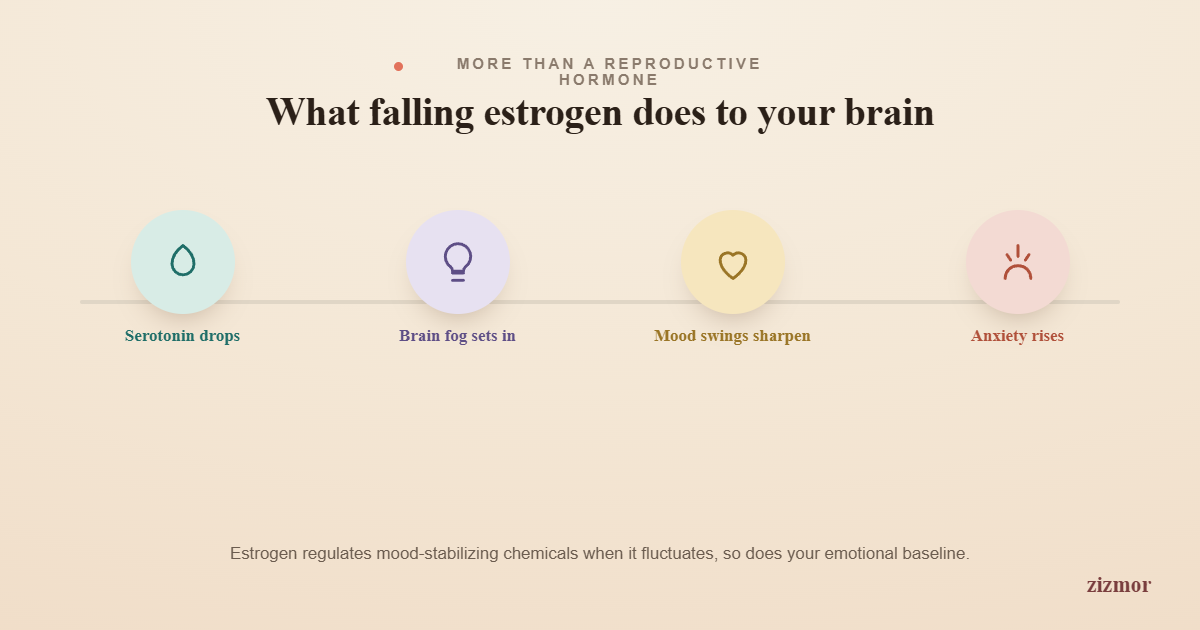
Estrogen is a busy hormone. It acts like a power source for your brain. It helps make brain chemicals like serotonin. Serotonin is your body's natural mood booster. It keeps you happy, calm, and steady.
During this transition, your estrogen levels do not just drop. They swing wildly up and down. When estrogen drops, your serotonin drops with it. They play a frustrating game of follow-the-leader. This drop leaves your brain without its usual emotional shield.
What Are the Physical Signs of Anxiety?
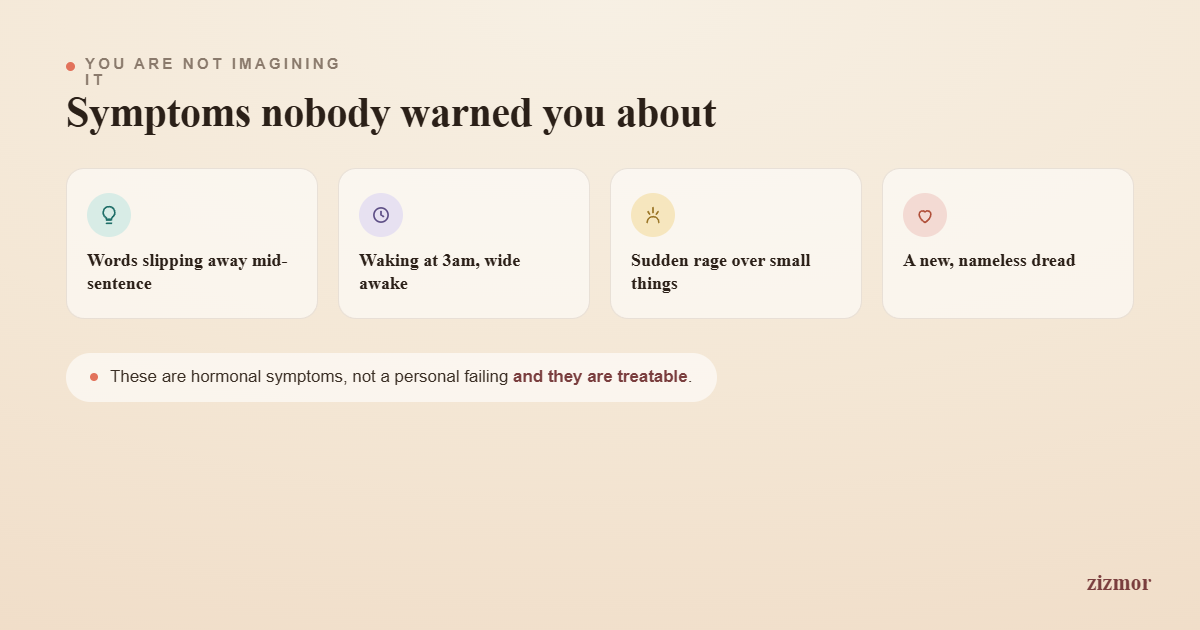
You might feel a sudden rush of fear. Your heart might race for no reason. These are anxiety symptoms during perimenopause.
This anxiety is not just in your head. It is a physical reaction. Estrogen drops trigger sudden spikes of adrenaline. This can make you feel tense, sweaty, and restless.
Some women even experience full panic attacks. Your heart pounds, and you feel like you cannot breathe. It can feel like a heart attack.
A global study by the Mayo Clinic and Flo looked at over 17,000 women. They found that 75% of perimenopausal women experience significant anxiety. You are not alone in this fight.
The Brutal Truth About Perimenopause Depression and Mood Swings
You might feel great in the morning and cry by noon. These emotional roller coasters are signs of perimenopause depression and mood swings.
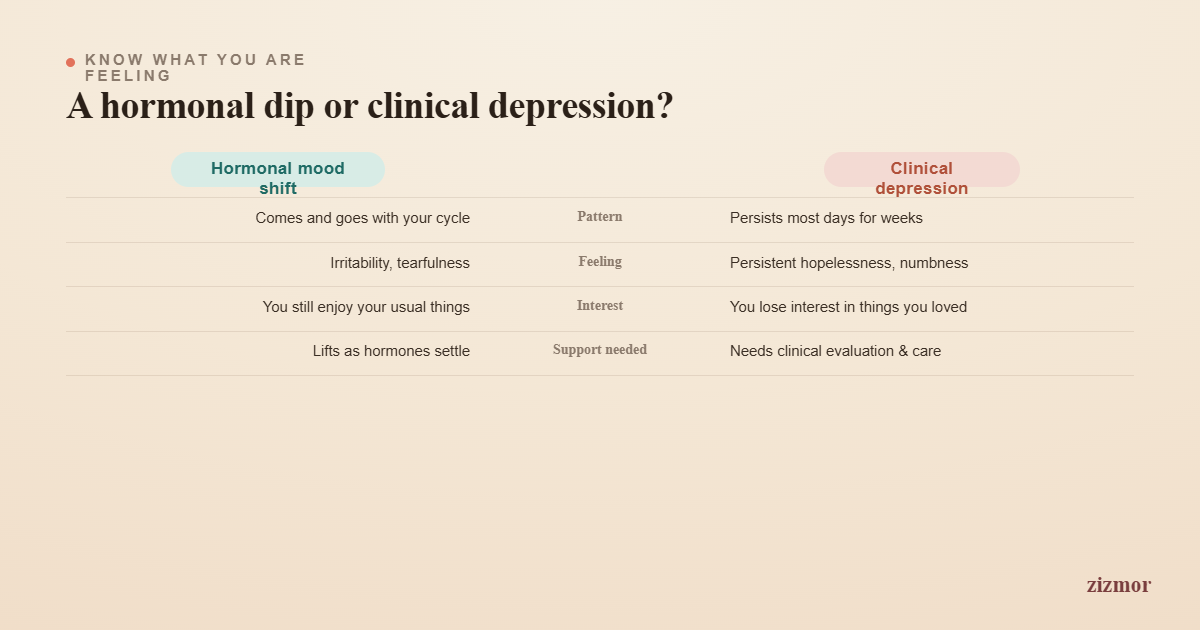
A study by University College London showed something shocking. Women are 40% more likely to experience depression during perimenopause than in their younger years. This is not just everyday sadness.
This depression can feel like heavy fatigue. You might lose interest in your hobbies. You might feel emotionally numb.
Harvard researchers found that the risk is even higher if you have had depression in the past. The hormonal swings wake up old vulnerabilities in your brain.
Daily Disruptions: Cognitive and Somatic Impacts
Hormone shifts do not stop at your mood. They impact how you think and sleep every single day.
How to Cope with Perimenopausal Brain Fog Daily
You walk into a room and forget why you are there. You struggle to find simple words. This is brain fog, and it affects up to 60% of women during this transition.
Estrogen keeps the energy flowing to your brain's front lobe. This lobe handles your memory and focus. When estrogen drops, your brain literally slows down.
You need practical tools. Here is how to cope with perimenopausal brain fog:
- Write everything down in one single planner or app.
- Use focus sprints: work for 25 minutes, then take a 5-minute physical break.
- Eat protein and healthy fats at breakfast to keep your blood sugar steady.
- Keep your brain active by reading or learning a new skill.
These memory glitches are temporary. Your brain will adapt to the new hormone levels.
Sleep Loss: How Perimenopause Sleep Disturbances and Mental Health Tie Together
You toss and turn all night. You wake up soaked in sweat at 2 AM. The link between perimenopause sleep disturbances and mental health is incredibly strong.
Night sweats slice up your deep sleep. This lack of sleep ruins your brain's ability to heal. It makes you ten times more likely to get depressed.
Anxiety makes it hard to fall asleep, and poor sleep makes your anxiety worse. It is a painful circle.
To break this cycle, you must practice cool sleep habits. Keep your bedroom cold. Avoid screens for one hour before bed. Talk to a doctor about taking progesterone at night to improve sleep quality.
Irritability and Rage: Structural Approaches to Perimenopause Rage and Irritability Management
Have you ever felt a sudden, blinding anger over a tiny issue? Many women call this perimenopause rage. It is a real physical response to dropping estrogen levels.
When estrogen falls, your brain's ability to handle stress drops. Your body releases more cortisol, the stress hormone. This makes you feel like you are always on edge.
We use specific tools for perimenopause rage and irritability management:
- Track your anger triggers in a daily journal.
- Take three deep, slow belly breaths when you feel the anger rising.
- Step away from the situation for five minutes to cool down your nervous system.
These steps help calm your brain's alarm system. They give you back control over your reactions.
The Ripple Effect: Professional and Personal Dimensions
The mental symptoms of midlife do not stay locked inside your mind. They spill over into your home and your office.
How Does Hormone Change Impact Your Home Life?
Your changing mood can put a massive strain on your family. This is the impact of perimenopause on relationship stress.
You might snap at your partner or withdraw from your children. Many women feel too ashamed to talk about what they are going through. In fact, 80% of women do not even discuss their symptoms with their spouse.
This silence creates a wall of misunderstanding. Your family might think you are angry at them when your body is just struggling to adapt.
Open communication is your best weapon. Tell your loved ones that your body is going through a physical transition. Ask for patience and help during difficult days.
Strategies for Managing Perimenopausal Stress at Work
Your career should be at its peak, but brain fog and fatigue are making your job feel impossible. You are not alone in this struggle.
Research shows that menopausal symptoms cost the UK economy 14 million working days every year. Nearly 900,000 women have left their jobs because their symptoms were too hard to manage at work.
You can protect your career. Use these key habits for managing perimenopausal stress at work:
- Block out specific times on your calendar for deep, quiet work.
- Take short, physical walks to reset your focus after meetings.
- Say no to extra tasks that drain your mental battery.
- Speak to your human resources team about flexible hours or remote work options.
These strategies give your brain the rest it needs to perform well.
Clinical Differentiators: Navigating the Medical Landscape
You must understand exactly where you are in your transition to get the right medical care.
What Is the Difference Between Perimenopause and Menopause Mental Symptoms?
Many people confuse these two terms. The key is looking at the difference between perimenopause and menopause mental symptoms.
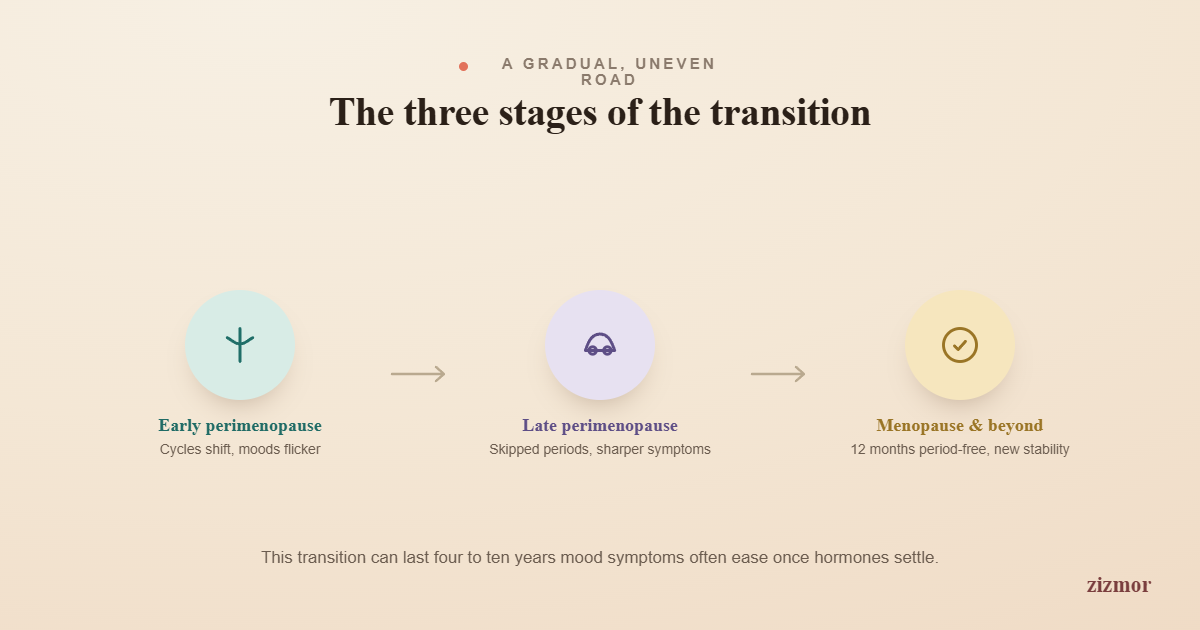
Perimenopause is the active transition phase. Your hormones are swinging wildly. This is when emotional swings, anxiety, and brain fog are at their worst.
Menopause is the destination. It is officially reached after you go 12 full months without a period. During menopause, your hormones stop swinging. They sit at a permanently low level. Your mood swings will typically start to settle down once your body gets used to this new baseline.
When Is It Time to Call a Professional?
You do not have to wait for a crisis to get help. You need to know when to seek help for perimenopausal anxiety and sadness.
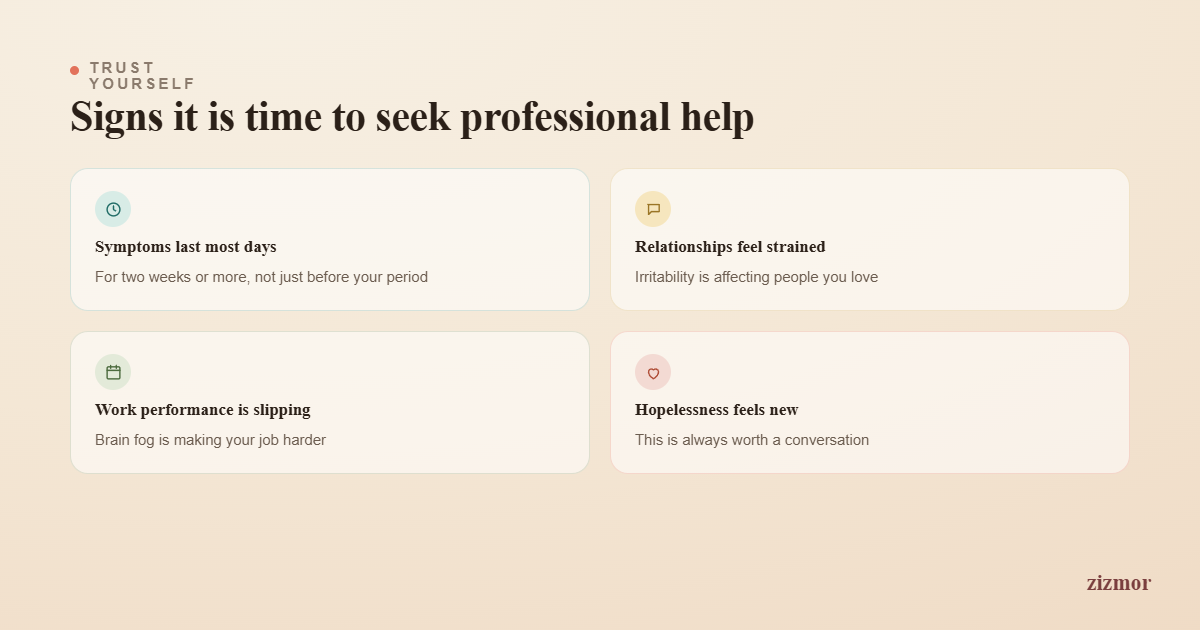
If your symptoms last for more than 2 weeks, it is time to act. If your mood swings keep you from doing your job or hurt your relationships, seek help immediately.
Watch for these warning signs:
- You feel hopeless, empty, or lost.
- You use alcohol to numb your feelings or help you sleep.
- Your friends and family tell you that you seem different.
- You have thoughts of self-harm.
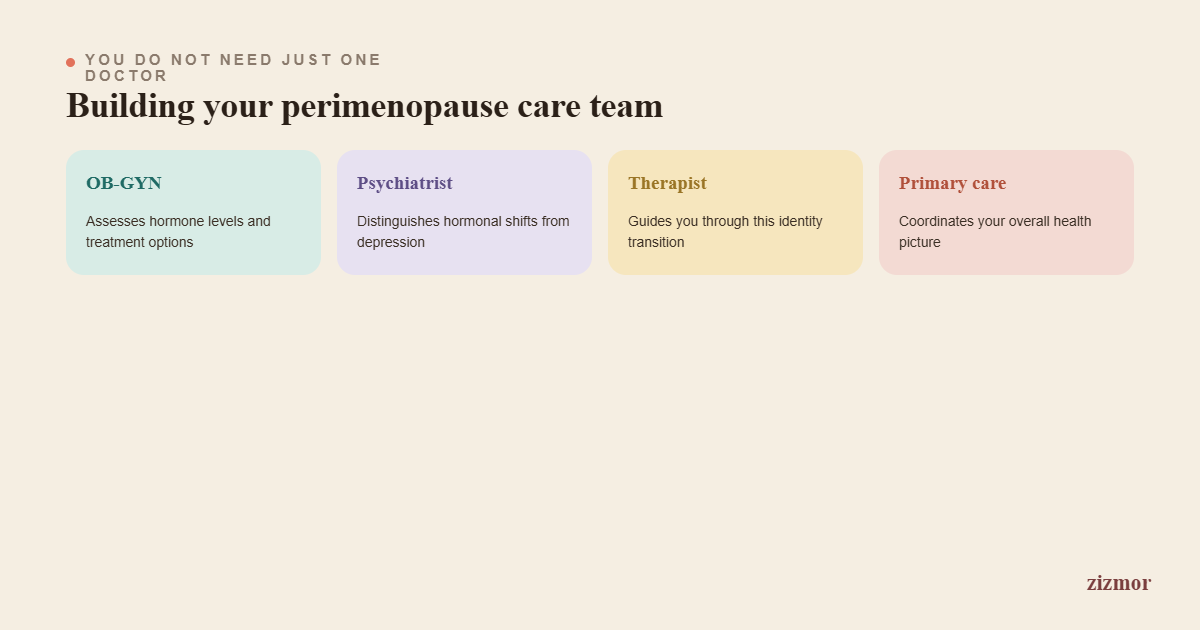
We can help you evaluate your symptoms and build a personalized treatment plan.
Evidence-Based Intervention Matrix: Treatment Pathways
There is no single magic cure for perimenopausal symptoms. A combination of different treatments works best.
Medical and Therapy Options for Perimenopausal Mental Health
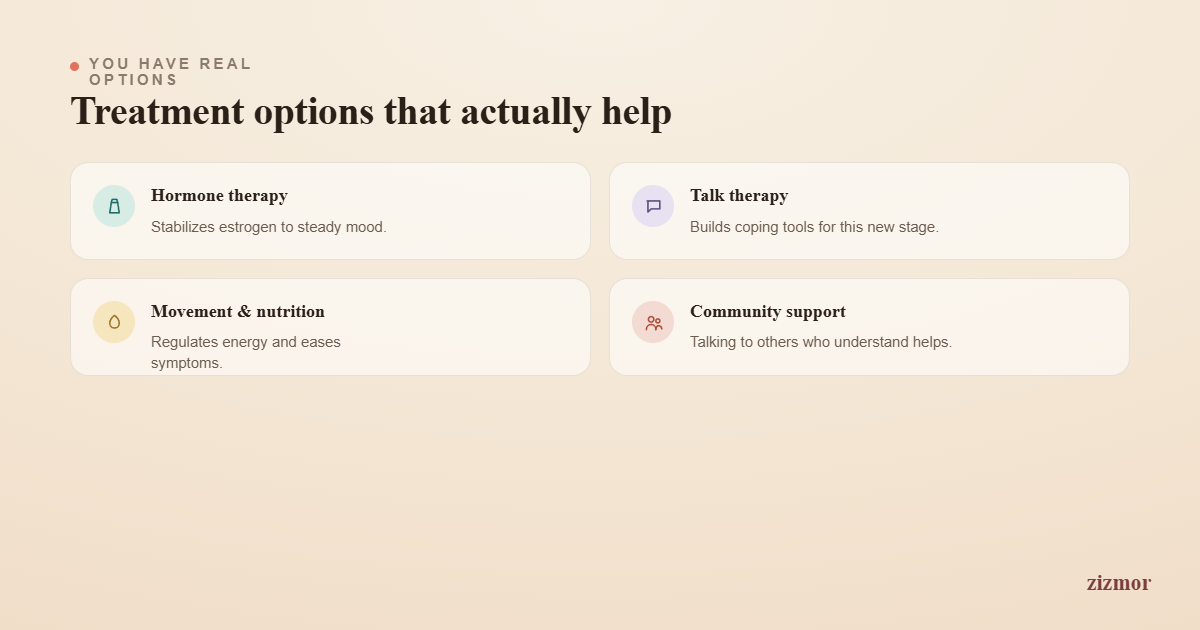
You have many safe pathways to explore. We look at all therapy options for perimenopausal mental health.
Hormone Replacement Therapy (HRT) can help stabilize your estrogen levels. This can relieve brain fog, hot flashes, and mood swings. However, HRT is not safe for everyone, especially those with a history of breast cancer or stroke.
Low-dose antidepressants can also help. They balance your brain chemistry and can even reduce physical hot flashes. Talk therapy is another powerful tool to help you process the life changes of midlife.
The Power of Cognitive Behavioral Therapy for Perimenopause Symptoms
Talk therapy can change how your brain reacts to physical changes. We highly recommend cognitive behavioral therapy for perimenopause symptoms.
CBT is a structured, practical form of therapy. It teaches you to identify negative thought patterns. It helps you manage stress and anxiety before they turn into panic attacks.
Studies show that CBT is highly effective for reducing sleep problems and improving mood during midlife. It gives you active coping skills that you can use every single day.
Exploring Natural Remedies for Perimenopause Anxiety Relief
If you prefer a non-medical path, you have excellent options. You can use natural remedies for perimenopause anxiety to calm your nervous system.
Aerobic exercise is a natural mood booster. Walking, swimming, or dancing releases endorphins and reduces stress hormones.
Mindfulness and deep breathing exercises are also incredibly useful. Just 15 minutes of quiet meditation a day can lower your cortisol levels and improve your focus.
Best Supplements for Perimenopausal Mood Support
You can also use targeted nutrition to support your brain. We recommend specific supplements for perimenopausal mood support:
Always talk to our clinical team before starting any new supplements.
Finding Community: Support Groups for Perimenopausal Mental Health
You must not go through this transition alone. Isolation makes your anxiety and depression feel much worse.
Joining support groups for perimenopausal mental health can change your life. Sharing your experiences with other women who are going through the same struggles provides deep comfort and validation.
There are many online communities, local meetups, and clinical groups available. Finding your community is a vital step toward long-term recovery.
Reclaiming the Mental Health Side of Perimenopause
You do not have to live in a state of constant fear, exhaustion, or rage. The mental health side of perimenopause is a physical transition, not a personal failure.
Your brain will stabilize. Your focus will return, and you can feel like yourself again.
Take the first step to save your sanity today. Call our office at Dr. Michael J. Zizmor's practice. Let us sit down, review your unique history, and develop a clear, clinical plan to get your life back. You deserve to thrive in this chapter of your life. We are here to help you do exactly that.
FAQs
Can thyroid issues mimic perimenopause anxiety?
Yes. An overactive thyroid gland can cause a racing heart and extreme panic, confusing your doctors. You must get a complete medical checkup to find the true culprit. Call our office today to secure your accurate diagnosis.
Can depression trigger early perimenopause?
Yes. Severe sadness in your late thirties can actually push your ovaries to transition much earlier. Do not wait for your body to break down. Contact us now to protect your mental and physical health immediately.
Can birth control pills help perimenopause depression?
Yes. Certain birth control pills can stabilize your wild hormone swings and lift your heavy mood. But you need a custom medical plan to stay safe. Contact us today to find your best path forward.
Does perimenopause trigger severe mental paranoia?
Yes. Unstable hormones can trigger sudden, scary paranoia and worsen serious mental health conditions. Do not let these intense fears ruin your peace of mind. Call our medical experts today to get help and feel secure again.
Can perimenopause make your ADHD symptoms worse?
Yes. Dropping estrogen limits your attention span and makes focus nearly impossible, especially if you already have ADHD. Stop struggling through the daily confusion alone. Contact us right now to build your clear plan for mental relief.