The Weight of the Infinite Task: Navigating Parenting Stress and Burnout

What's inside:
- The Real Numbers on Stress
- What is Parenting Stress and Burnout?
- Parenting Stress vs. Depression
- Signs of Burnout in Moms
- How to Cope with Newborn Stress
- Tips for Single Parents
- How Burnout Affects Your Kids
- Tips to Manage Parenting Stress
- Reducing Screen Time Stress
- Quick Mindfulness Exercises
- Easy Self-Care Ideas
- How to Ask for Help
- Finding Support Groups
- Books on Parental Burnout
- Therapy Options for Parents
- Frequently Asked Questions
Do you feel like you are running on empty? You are not alone. Right now, a massive 41% of parents across America are so exhausted that they cannot even function on most days. That is almost half of us. Nearly 48% say their daily stress is completely overwhelming.
If you do not change things right now, this constant weight will slowly crush your health, your relationship, and your kids. This is the silent crisis of parenting stress and burnout.

We must act today. We cannot wait for things to get better on their own. We need to stop, look at the facts, and reclaim our lives.
That is why we are sharing this guide. We want to help you find your footing again. We write this guide with the trusted, real-world experience of Dr. Michael J. Zizmor. He is a mental health physician licensed to practice medicine in California (Physician's and Surgeon's License G50848, NPI 1124395421) who has spent over forty years helping people understand their minds. Dr. Zizmor started his path at the University of California, Berkeley, where he earned his undergraduate degree in Psychology.
He then went to the University of Kansas School of Medicine to earn his medical doctorate. He completed his clinical internship at Boston University-affiliated hospitals and began psychiatric residency training at St. Elizabeths Hospital in Washington, DC; he is not board-certified in psychiatry. Dr. Zizmor believes that understanding how your mind works is the first step toward feeling better, and he's here to help you look at the facts clearly.
He has spent decades helping families heal. Now, he wants to help you. Let us start by looking at how parental stress compares to life without kids.
The Clinical Reality of Parenting Stress and Burnout
We hear these terms all the time. But what do they actually mean? It is easy to mix them up. You might think you are just tired when you are actually facing a serious clinical issue.
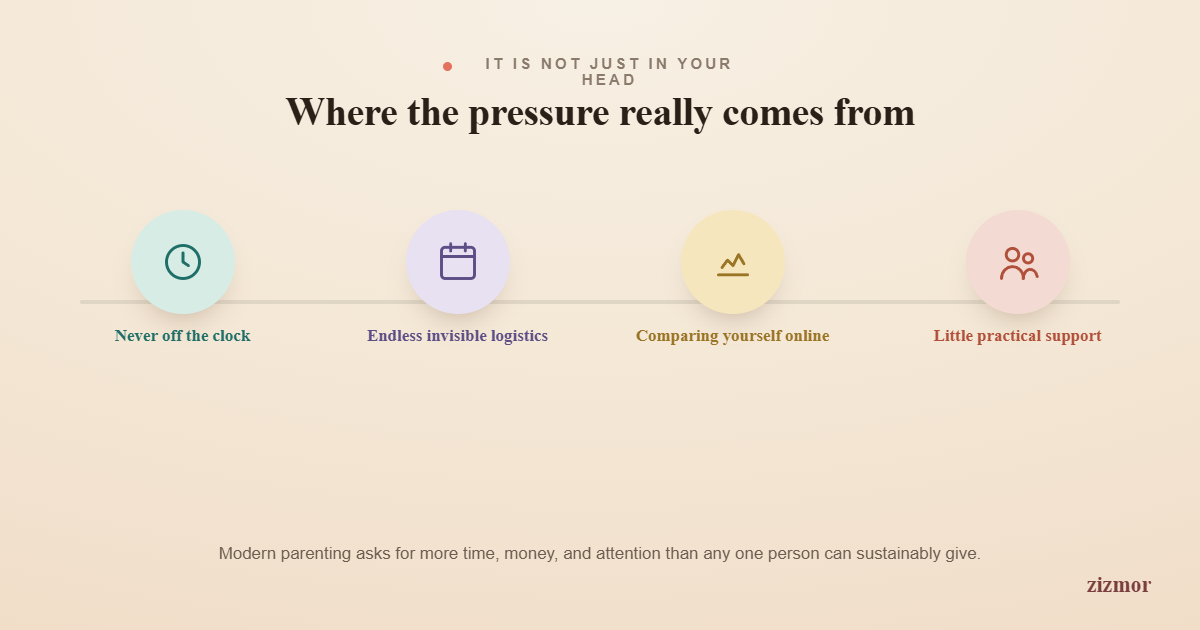
First, let us look at normal stress. Parenting stress is a daily response to the everyday challenges of raising kids. It comes in waves. You might feel tense when your toddler throws a tantrum. But once they calm down, your body relaxes too. A little bit of this stress can even help you solve problems.
Severe burnout is different. It happens when the demands of caring for your kids constantly outpace the help and energy you have. You feel a deep, physical exhaustion that sleep does not fix. You start to put up an emotional wall between yourself and your kids. You might feel like you are just going through the motions on autopilot.
What is the difference between parenting stress and depression?
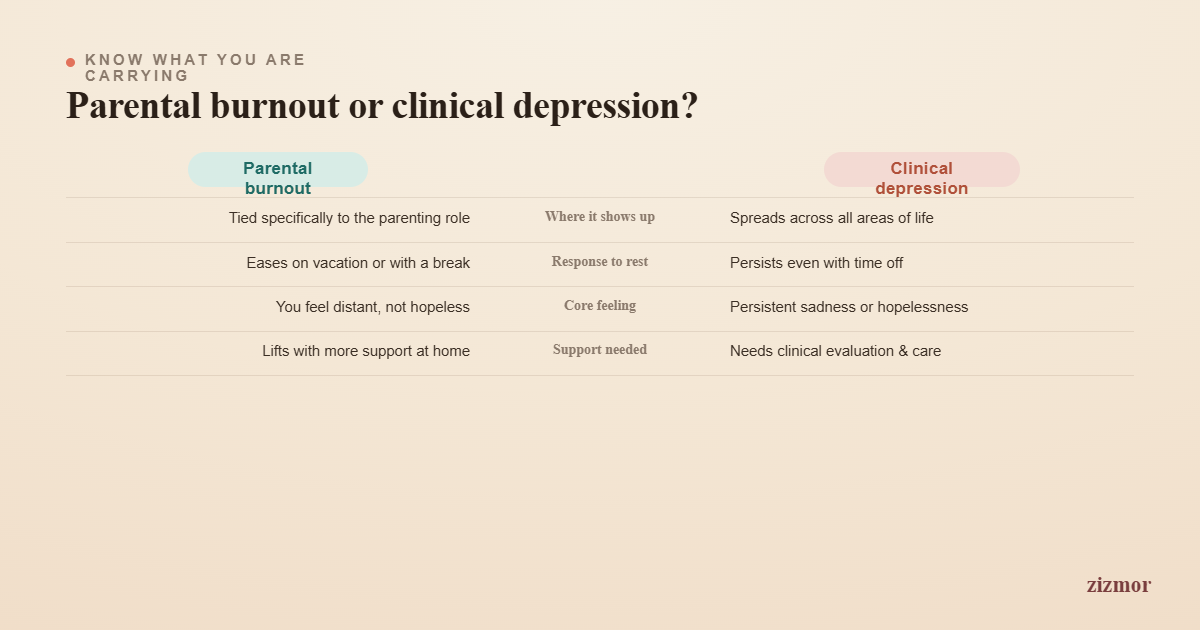
Now, let us examine the clinical difference between parenting stress and depression.
Depression is a global mood disorder. It colors every single part of your life. If you have depression, you lose interest in your job, your hobbies, and your friends. You feel hopeless and worthless no matter where you are or what you are doing.
Burnout is role-specific. It is tied only to your job as a parent. You might feel completely empty when you are at home with your kids. But when you go to work or hang out with a friend, your energy and joy come back. It is a localized depletion.
Identifying the Signs of Parental Burnout Moms and Caregivers Experience
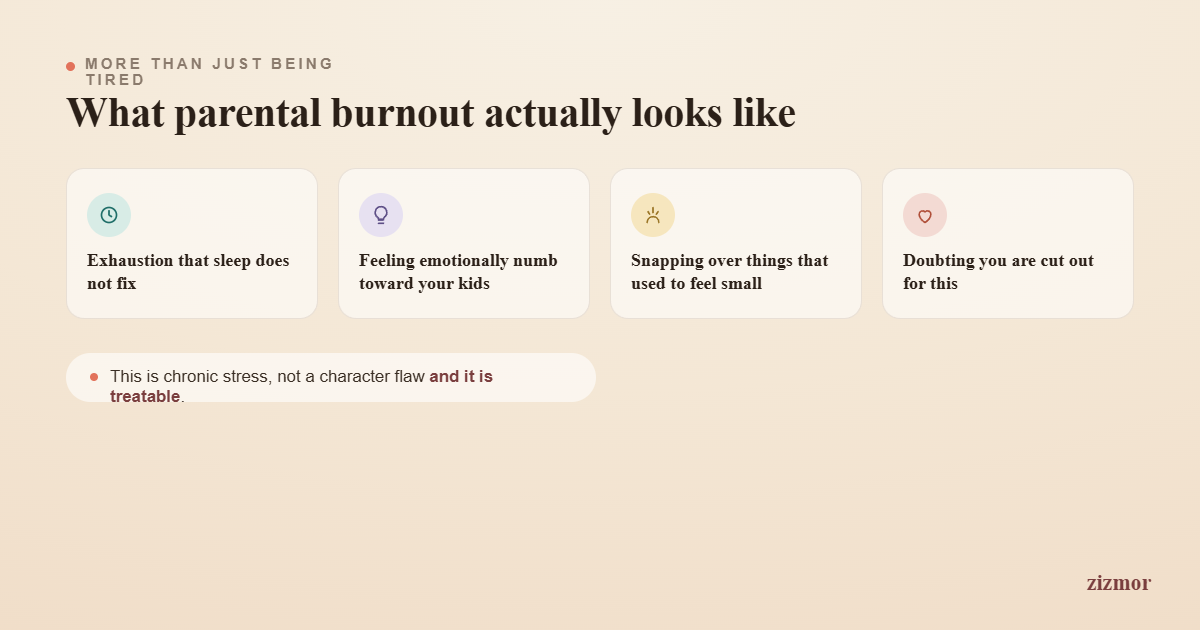
Mothers often bear a massive mental load. They do not just wash the clothes. They track the schedules, manage the moods, and make endless household decisions. This emotional labor can quickly lead to chronic exhaustion.
What are the signs of parental burnout moms experience?
We need to identify the exact signs of parental burnout moms deal with every day.
The first sign is a fatigue that sleep cannot touch. You wake up as tired as when you went to bed. You might feel a heavy brain fog that makes simple choices feel impossible.
Another major sign is snapping at your kids over tiny things. You do not want to raise your voice, but you have no patience left. You feel a wave of guilt right after you snap.
You might also notice physical warning signs. This includes:
- Constant tension headaches
- Sudden skin rashes or stomach upsets
- Catching colds and flu much more often
- Feeling a racing heart or sudden panic
When your body starts to ache, it is screaming for help. It means your nervous system is trapped in fight-or-flight mode.
How to cope with parenting stress newborns bring into your home.
The arrival of a new baby can shake your world. Sleep loss and healing from birth make you incredibly vulnerable. Let us look at how to cope with parenting stress newborns trigger.
First, you can learn to decode your baby's cries. This is a game-changer. Clinical studies show that parents who learn Dunstan Baby Language feel much more confident and experience lower stress.
By listening to the basic sounds your baby makes, you can react faster:
- A "neh" sound means your baby is hungry.
- A "heh" sound means they feel uncomfortable or cold.
- A "owh" sound means they are sleepy.
Second, protect your sleep. Sleep loss ruins your mental health. Talk to your partner or co-parent to set up a clear schedule. Ensure each of you gets at least four hours of continuous, uninterrupted sleep every night.
Preventing parental burnout single parents face daily
If you are raising a child alone, you do not have a backup system. There is no handoff at 6 PM. You carry the full mental, physical, and financial load.
When we talk about preventing parental burnout single parents must focus on boundary setting. You cannot run on a continuous threat-monitoring setting.
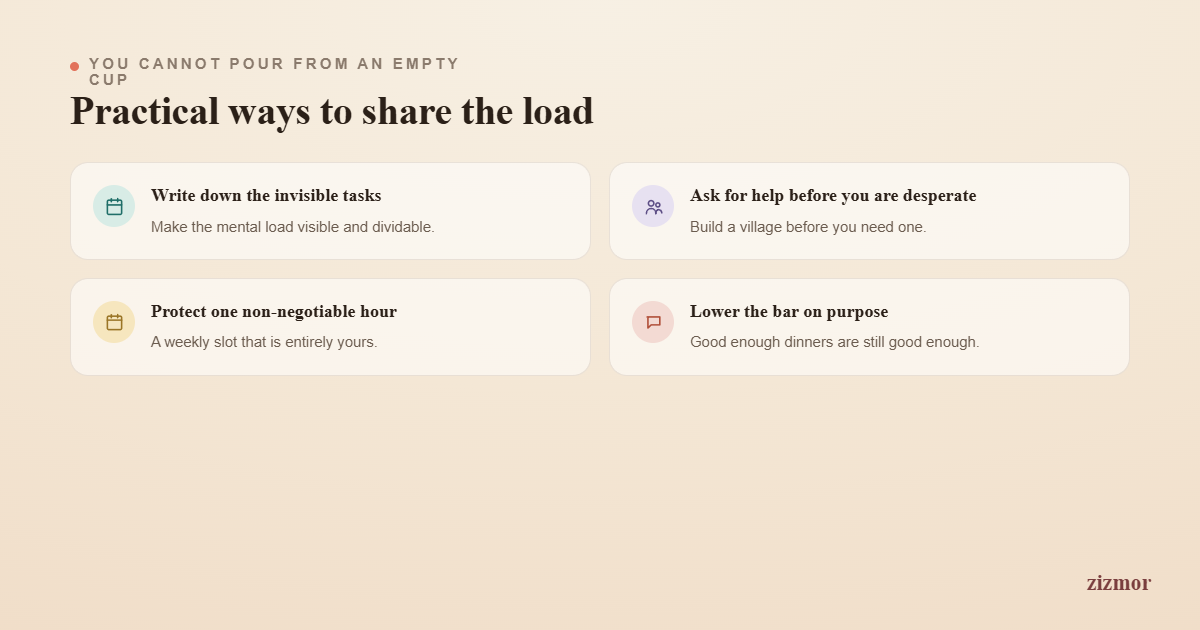
First, lower your household expectations. Let the dishes sit in the sink. Let the laundry pile up for an extra day. It is okay to simplify your life to protect your peace.
Second, find a local childcare swap or neighborhood group. Trade a few hours of watching kids with another single parent. This gives both of you a free, predictable window to rest without kids.
Developmental and Familial Consequences
Your kids are like mirrors. They look at you to see if their world is safe. When you are deeply drained, it changes the way you interact with them.
How does your exhaustion affect your kids?
This is the direct impact of parental burnout on child development.
The main problem comes from a breakdown in co-regulation. This is a simple concept. Children have developing nervous systems. They cannot calm themselves down on their own. They need a calm, present adult to help them settle their big emotions.
When you are burned out, your emotional reserves are empty. You cannot offer them a steady presence. You might yell, withdraw, or go completely numb.
Children who do not get this steady co-regulation often face real issues:
- They might act out with tantrums or defiance
- They might become highly anxious or sad
- They can struggle to pay attention in school
- They can develop sleep issues or headaches of their own
Over time, this can lead to an insecure attachment style. Your child may struggle to trust others or build close relationships as they grow up.
Evidence-Based Interventions and Coping Mechanisms
You do not have to live in survival mode forever. You can start taking small, active steps to rebuild your energy.
What are the most effective strategies for managing parenting stress?
Let us explore the most effective strategies for managing parenting stress.
Work-life balance tips for preventing parental burnout
Juggling a career and a family is a recipe for overload. You cannot do it all perfectly.
Try these concrete work-life balance tips for preventing parental burnout:
- Do a mental load audit: Sit down with your partner. List every single household chore. Do not just list physical tasks. Include mental tasks, such as buying school supplies or booking doctor visits. Divide these tasks clearly so that no one person is carrying everything.
- Create transition zones: When you finish work, do not immediately jump into parent mode. Take five minutes to sit in your car or do a slow stretch. This tells your nervous system that the workday is over.
- Build duty-free blocks: Agree on a time when you are completely off-call. Your partner or a family member is in charge. You can leave the house or close your door to truly rest.
Reducing screen time related parenting stress.
We often use our phones to escape stress. But late-night scrolling actually makes your anxiety worse. It ruins your sleep and fills your brain with fake, perfect images of other families.
We can start reducing screen time-related parenting stress with simple rules:
- Turn off all screens 30 minutes before your bedtime.
- Keep your phone out of your bedroom at night.
- Stop googling minor symptoms at 2 AM. Trust your doctor instead of search algorithms.
- Delete apps that make you feel guilty or that make you feel like you are not doing enough.
Mindfulness exercises for stressed parents
You do not need to spend hours meditating on a cushion. You can use quick, physical tools directly in the middle of a chaotic day.
These mindfulness exercises for stressed parents take less than two minutes:
- The 2-to-1 breath: When you feel your chest get tight, stop. Inhale slowly for a count of four. Then, exhale slowly for a count of eight. Repeat this three times. This physically triggers your vagus nerve, slowing your heart rate.
- The sensory reset: Look around the room. Name five things you can see, four things you can touch, three things you can hear, two things you can smell, and one thing you can taste. This pulls your brain out of future worries and anchors you in the safe present.
- The body shake: Stand up and shake your arms and legs for 30 seconds. This helps release physical tension stored in your muscles.
Rebuilding internal resources: self-care ideas for parents with burnout
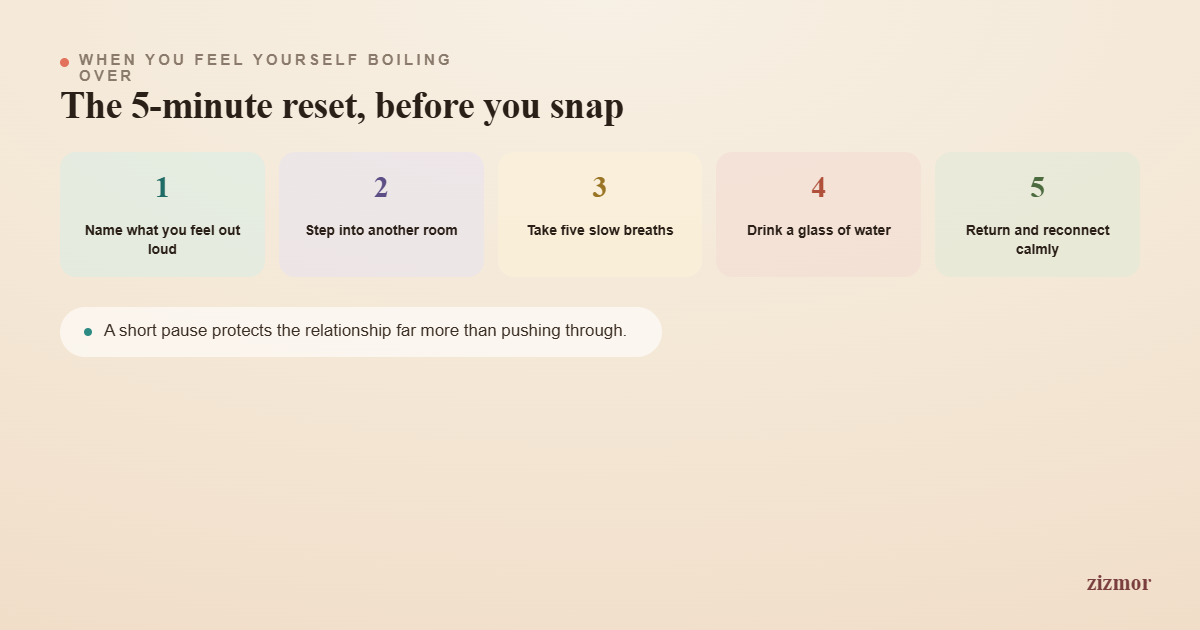
Self-care is not about expensive spa days. It is a daily practice of protecting your energy.
Here are realistic self-care ideas for parents with burnout:
- Use the Stressors and Rewards Scale: Make a list of your daily stressors. Write down which ones you can drop, like ironing clothes or cooking complex meals. Swap them for simple rewards, like drinking a hot cup of tea while it is still hot.
- Take a 5-minute movement break: Walk around your block or do a simple morning stretch. Moving your body releases happy chemicals in your brain.
- Learn to say no: If a school event or social visit feels like too much work, say no. Your mental health comes first.
Accessing Systemic Support Networks
No one can raise a child alone. We were built to parent in groups. Let us look at the best resources for parents experiencing burnout.
Overcoming the barriers of shame: how to ask for help with parenting stress
Asking for help can feel scary. You might feel ashamed or worry that others will judge you as a bad parent.
We can make it easier by learning how to ask for help with parenting stress:
- Be highly specific: Do not just say, "I need help." People do not know what to do. Instead, say, "Can you drop my oldest off at soccer practice this Thursday?"
- Keep it small: Ask for a 30-minute window to shower or go for a walk. Small tasks are easy for friends to say yes to.
- Agree on clear limits: When a relative watches your kids, set a clear pickup time. This prevents you from feeling guilty about taking too much of their time.
Community-based recovery: support groups for parenting stress
Sometimes, family and friends do not understand what you are going through. That is where peer support comes in.
Joining support groups for parenting stress helps you see that you are not alone. Hearing another parent say they also feel exhausted removes the deep shame. Look for moderated online boards or local community center groups where shaming is strictly banned.
Educational materials: books on overcoming parental burnout
Reading expert books can give you a fresh perspective on your stress.
Here are excellent books on overcoming parental burnout:
- "Parental Burnout: What It Is, Why It Matters, and How to Cope" by Dr. Moïra Mikolajczak and Dr. Isabelle Roskam. This book teaches you how to balance your stressors and resources.
- Parents Under Pressure: The U.S. Surgeon General’s Advisory. This is a free public guide. It explains the national crisis of parenting stress.
- "Stress in America" reports by the American Psychological Association. These reports show how money, technology, and isolation impact family well-being.
Clinical resolution: therapy options for parental stress
If you are struggling to get through the day, it is time to connect with a professional.


Let us look at professional therapy options for parental stress:
- Cognitive Behavioral Therapy (CBT): This therapy helps you identify and challenge thoughts like "I must be a perfect parent."
- Individual Parent Therapy: This focuses entirely on your own emotional regulation. It helps you heal your own childhood wounds so you do not pass them to your kids.
- Family Counseling: This helps improve the communication between everyone in your home.
Conclusion
You do not have to carry this heavy weight alone. Your health, your mind, and your children deserve a parent who can breathe, rest, and smile. By spotting the signs early, setting boundaries, and reaching out for professional support, you can break the cycle of exhaustion. Let us make today the day we change the story of parenting stress and burnout in your home. Reach out to our team today, and let us take the first step toward healing together.
FAQs
Do fathers get parental burnout too?
Yes. Dads experience this crushing weight just like moms do. They often hide it by pulling away and staying quiet. Do not let your partner drown in silence. Call us today to help save your family now.
Will parental burnout stop on its own?
No. It will not just vanish. It actually gets worse and poisons your life until you take action. Stop waiting for a miracle. Call our expert team right now to get the support your family needs to heal.
Does parental burnout ruin your memory?
Yes. This extreme stress floods your brain and causes severe brain fog. You will constantly forget simple tasks. Stop hurting your mind. Connect with us immediately so we can help you clear the fog and regain focus.
Can a vacation cure parental burnout?
No. Burnout is a deep, daily nervous system overload. A brief trip might offer temporary relief, but the exhaustion returns the moment you go home. Stop running away. Call us today to build real and lasting healing.
Should you hide burnout from your kids?
No. Kids notice when you are sad or angry. Trying to hide it only makes them worry more. Stop wearing a fake mask. Call us today so we can teach you how to talk and heal together.