Pathways to Recovery: Understanding Your Options for PTSD Treatment
Table of Contents
- Who Is Dr. Michael J. Zizmor?
- How Do We Define the Core Struggle of ptsd?
- Who Does Trauma Hurt the Most?
- What Are the Best Ways to Heal Your Brain?
- Can ptsd Be Cured Naturally?
- How Do Holistic Paths Support Your Recovery?
- How Can You Sleep Better When Your Mind Is Racing?
- How Does Trauma Change the Way We Connect?
- How Do You Get Financial Help for Trauma?
- What Should You Read to Understand Your Journey?
- How Do You Cope When the Past Attacks You?
- Reclaiming Your Peace Today
Right now, as you read these words, a silent clock is ticking. Millions of people are losing their jobs, their marriages, and their sanity to a hidden enemy. They do not even know their brain has physically changed. The World Health Organization’s global mental health report reveals that over one billion people globally struggle with mental health conditions. Over half of those with severe issues never get help. They stay locked in fear. Every single day, untreated trauma wears down your heart and your mind. You are losing precious time. If you wait, you risk losing the people you love. You risk losing yourself. But you do not have to live this way. There is a way out. We can help you find it. We are going to look at how ptsd impacts your life and what you can do to take your life back. Do not wait until tomorrow. Your healing must start today.
Who Is Dr. Michael J. Zizmor?
We write this guide with the trusted, real-world experience of Dr. Michael J. Zizmor. He is a mental health physician licensed to practice medicine in California (Physician's and Surgeon's License G50848, NPI 1124395421) who has spent over forty years helping people understand their minds. Dr. Zizmor started his path at the University of California, Berkeley, where he earned his undergraduate degree in Psychology.
He then went to the University of Kansas School of Medicine to earn his medical doctorate. He completed his clinical internship at Boston University-affiliated hospitals and began psychiatric residency training at St. Elizabeths Hospital in Washington, DC; he is not board-certified in psychiatry. Dr. Zizmor believes that understanding how your mind works is the first step toward feeling better, and he's here to help you look at the facts clearly.
Following medical school, Dr. Zizmor completed his clinical internship. He worked at hospitals affiliated with Boston University. He gained hands-on clinical experience across a range of medical disciplines. He worked in emergency rooms. He worked in general clinics. He saw how trauma affects people in the real world. He saw how stress makes the heart race. He saw how pain lingers in the muscles.
He then pursued additional psychiatric residency training. He completed this training at St. Elizabeths Hospital in Washington, DC. This deepened his focus on specialized mental health care. St. Elizabeths Hospital is a famous place with a rich history of helping people. There, he worked with the most complex mental health cases. He learned how to listen to stories of deep pain. He learned how to build safe spaces for healing.
With 40 years of experience in the mental health field, Dr. Zizmor brings a wealth of clinical knowledge. He brings practical insight to his work. This is shaped by both rigorous academic training and years of real-world practice. He knows science. He knows the human heart. He understands your pain, and he knows how to help you fix it.
How Do We Define the Core Struggle of ptsd?
To heal, you must first know what you are fighting. Many people get confused about their symptoms. You might hear different terms and wonder what they mean. We need to talk about the difference between ptsd and c-ptsd. They are not exactly the same thing.
Think of regular trauma as a single, sudden storm. A car crash, a natural disaster, or a sudden attack can shake your world. This is what we call post-traumatic stress disorder, or regular trauma. Your brain is shocked by one terrible day.
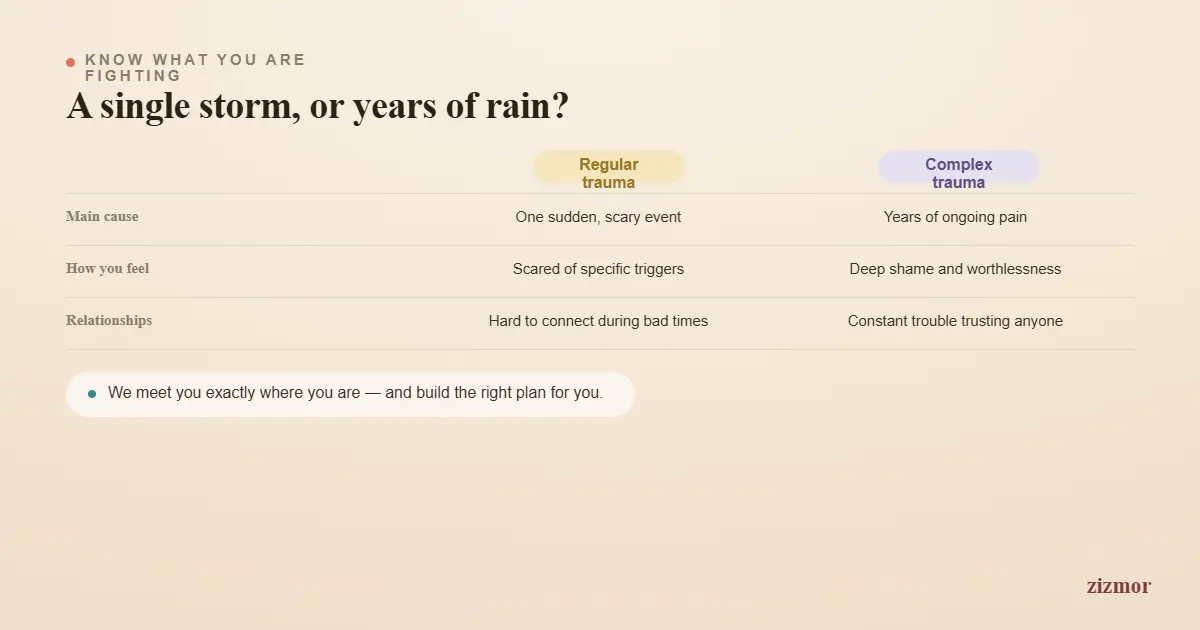
Complex trauma is different. It is not a single storm. It is like living in a rainy, cold climate for years. It happens when you experience repeated trauma over a long time. This might be childhood abuse or an abusive relationship. You feel trapped and cannot escape. You are always waiting for the next blow.
The World Health Organization formally recognizes both of these struggles. But they affect your mind in different ways.
Let us look at a simple table to see how they differ:
If you suffer from regular trauma, you might have nightmares. You might jump at loud noises. You try to avoid anything that reminds you of that one bad day.
If you have complex trauma, you carry all of those symptoms. But you also carry a heavy weight in your soul. You feel like you are fundamentally broken. You struggle to control your anger or sadness. You feel cut off from other human beings. You might feel like you are a bad person, even though you did nothing wrong.
Knowing this difference helps us build the right plan for you. We do not treat a single bad memory the same way we treat years of pain. We meet you exactly where you are. We help you unpack the heavy bags you have been carrying for so long.
Who Does Trauma Hurt the Most?
Trauma does not treat everyone the same way. It hits different people in different ways. We see this clearly when we look at the numbers.
According to the National Institute of Mental Health, women are twice as likely as men to develop these struggles. We must talk about ptsd symptoms in women to understand why.
Women often experience different types of trauma. They are more likely to face domestic abuse or sexual assault. These events happen close to home. They shatter your sense of safety. They happen in places where you should feel loved and protected.
When women experience these symptoms, they often hurt on the inside. They might blame themselves for what happened. They might think they should have done something different. They might withdraw from friends and family. According to the Cleveland Clinic’s clinical guide to PTSD, they often feel constant physical tension and bodily fatigue. They might have chronic pain or headaches. Their bodies are constantly screaming for help.
Now, think about what happens when trauma starts early in life. We have to look at the childhood trauma ptsd symptoms adults carry. Growing up in a scary home changes how your brain grows. If you had to hide from angry parents, your brain learned to stay on high alert. It prioritized survival over normal growth.
As an adult, you might feel like you are always waiting for the next bad thing to happen. You might get angry very fast. Or you might freeze up and feel numb. You might have "emotional flashbacks". This is when a current event makes you feel tiny, helpless, and terrified, just like when you were a child. You do not even know why you are crying or running away. Your body is simply trying to protect the little child inside you. We want you to know that those feelings make sense. You are not crazy. Your brain is just doing what it had to do to survive.
What Are the Best Ways to Heal Your Brain?
Your brain is amazing. It can heal, even after severe trauma. You just need to show it how. We use scientific methods that work.
Let us talk about ptsd treatment options for veterans first. Veterans face intense combat or military trauma. They see things that no human should ever see. They need strong, proven therapies to find peace. These therapies work for civilians too, and you can map out your options using the U.S. Department of Veterans Affairs interactive PTSD Treatment Decision Aid.
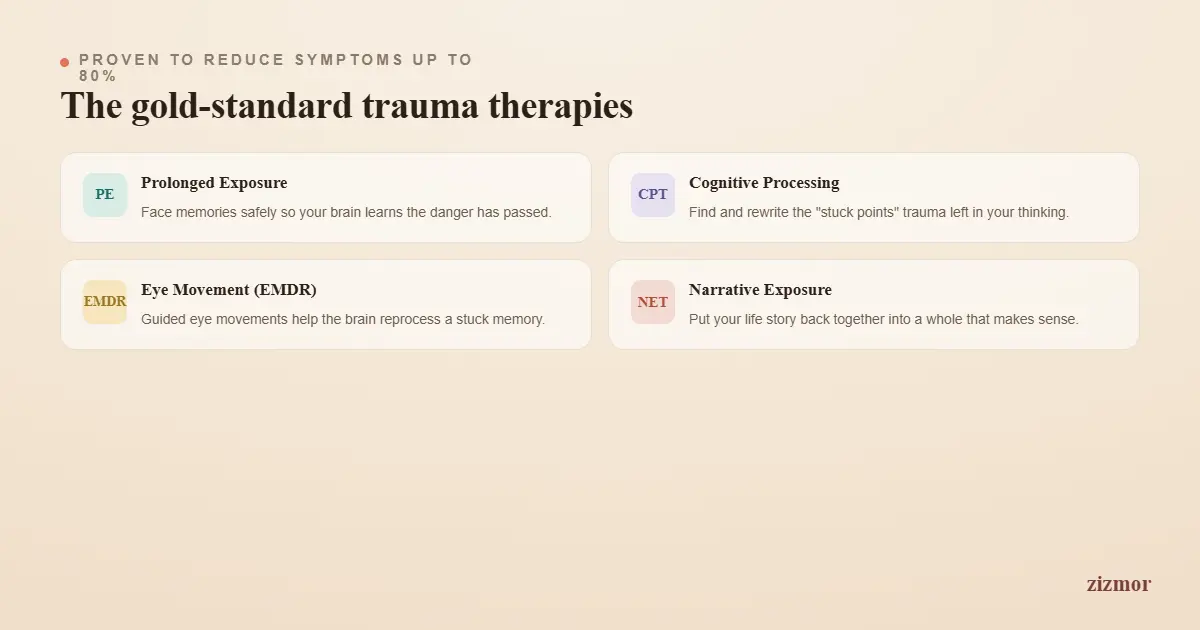
The first therapy is Prolonged Exposure. We call it PE. When you have trauma, you run away from things that remind you of the event. Running away makes the fear grow. It tells your brain that the memory is still dangerous. In PE, we help you face your memories in a safe room. You talk about what happened. You go to safe places you have been avoiding. Slowly, your brain realizes the danger is gone. You take your power back.
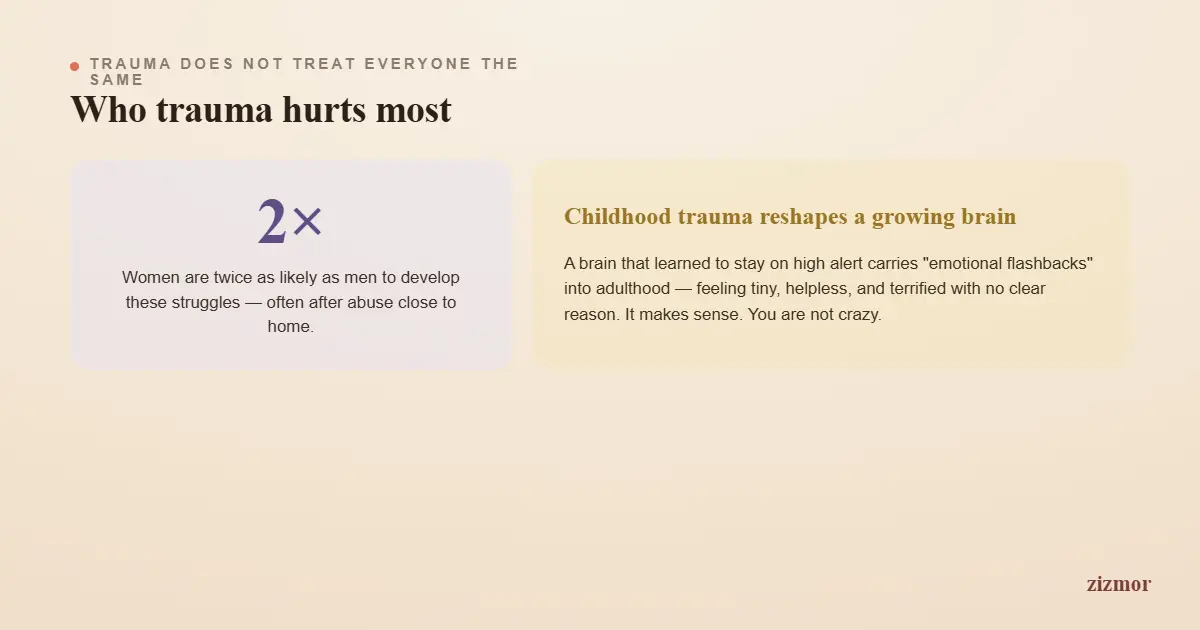
The second therapy is Cognitive Processing Therapy. We call it CPT. Trauma changes how you think. You might think the world is entirely evil. You might think you can never trust anyone again. These thoughts are called "stuck points". We help you write down these thoughts and look at them closely. We help you change these thoughts to healthier ones. You learn to see that while bad things happened, you are safe now.
The third therapy is Eye Movement Desensitization and Reprocessing. We call it EMDR. This therapy uses your eyes to heal your mind. You think of a bad memory while following our hand move back and forth. Or you listen to tapping sounds. This helps your brain process the old, stuck memory. It takes the painful sting out of the memory. The memory becomes just a regular story from your past.
Let us look at Brief Eclectic Psychotherapy. We call it BEP. It mixes cognitive behavioral therapy with a symbolic ritual. You practice relaxation skills and write a letter about the event. Then, you hold a farewell ritual to leave the trauma in the past. This helps you say goodbye to the pain.
Let us look at Narrative Exposure Therapy. We call it NET. It was made for people who survived wars or ongoing violence. You talk through your life story in order. You start from birth and go to the present day. You put the pieces of your life back together into a story that makes sense.
These are the gold standards of care. They are proven to reduce your symptoms by up to 80%. They give you real tools to change your life. They help your brain file the memories away where they belong.
Can ptsd Be Cured Naturally?
Many people ask this question: can ptsd be cured naturally? It is a fair question. You might want to avoid pills or doctors. You might want to find your own path to peace.
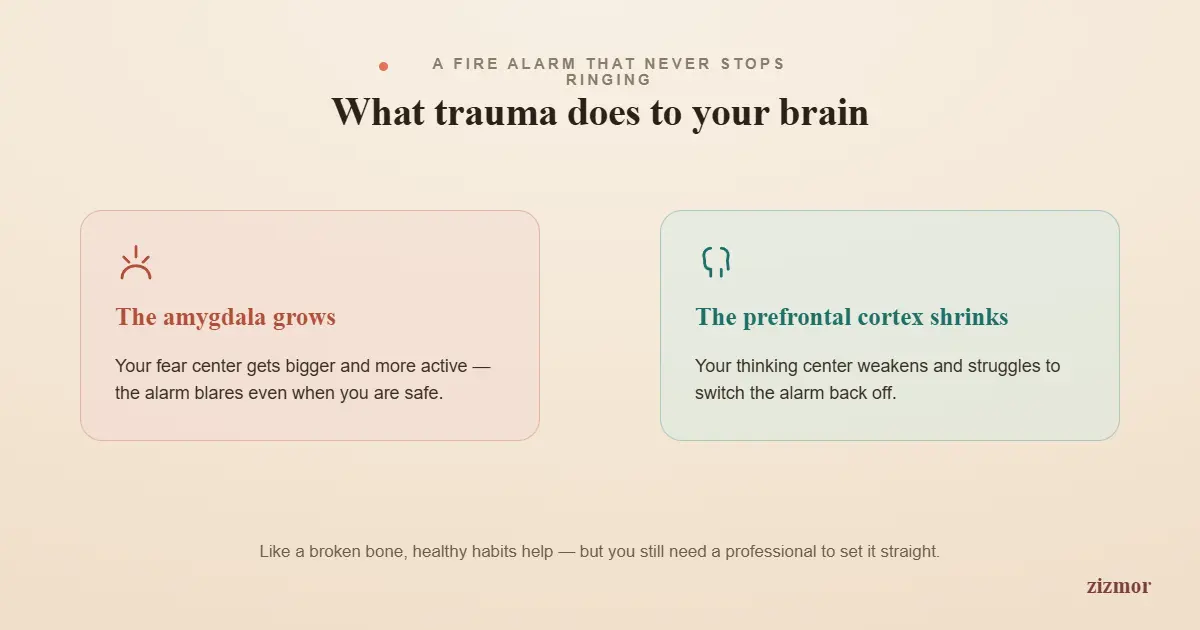
We need to be honest with you. Simple lifestyle changes can make you feel better. They can lower your daily stress. But severe trauma actually changes your brain structure. The fear center in your brain, called the amygdala, gets bigger and more active. It is like a fire alarm that never stops ringing. The thinking center, called the prefrontal cortex, gets smaller and weaker. It cannot turn the alarm off.
You cannot easily fix this structural change on your own. Think of it like a broken bone. You can eat healthy food to help it heal. But you still need a doctor to set the bone straight.
Natural methods are wonderful helpers. They support your recovery. But they work best when you combine them with professional therapy. We look at how you can use both to get the best results. We want you to have every tool available.
How Do Holistic Paths Support Your Recovery?
We believe in treating your whole self. Your mind and your body are connected. You cannot heal one without the other.
Let us look at some holistic approaches to ptsd recovery. These methods help calm your nervous system. They help you feel safe in your own skin.
First, try somatic experiences. This is body therapy. Trauma traps energy in your body. It makes you want to run or fight, but you cannot. This therapy helps you release that physical tension. You learn to shake off the old fear. You let your body complete the fight or run response that was cut short years ago.
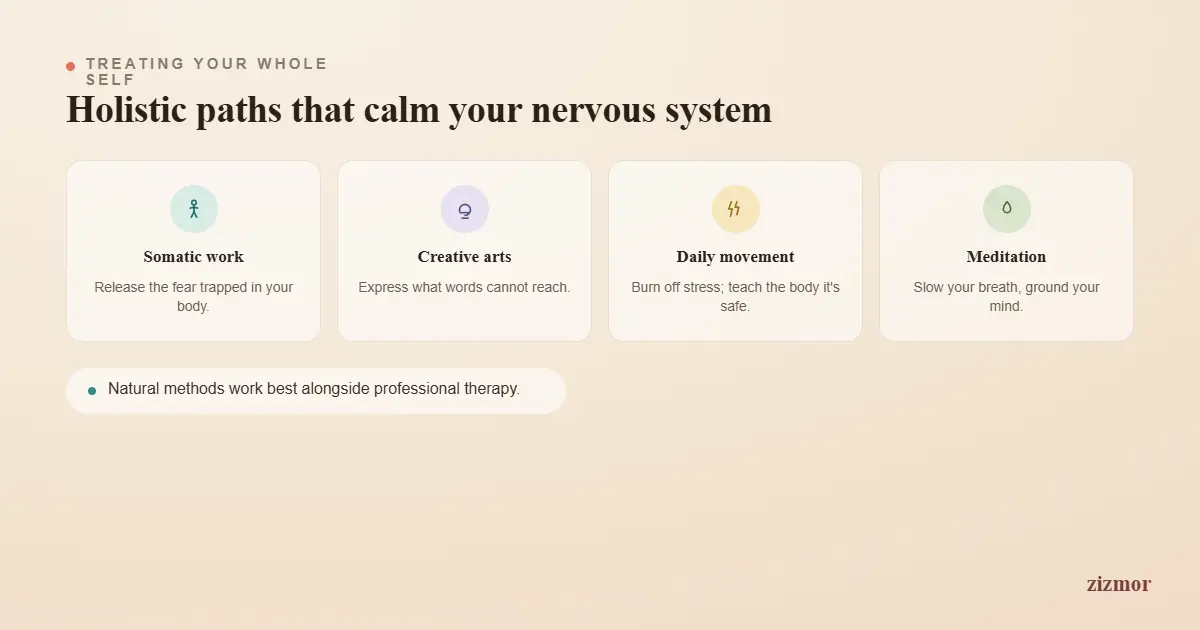
Second, try creative arts. Sometimes, you cannot find the words for your pain. Painting, playing music, or writing can help you express what is inside. It gives your brain a break from thinking. It lets you paint or write your feelings without having to explain them to anyone.
Third, look at your daily movement. Just twenty minutes of exercise a week can lift your mood. Walking in nature or swimming releases happy chemicals in your brain. It teaches your body that movement is safe and fun. It burns off the extra stress hormones that build up in your blood.
We also recommend meditation techniques for ptsd anxiety. When panic hits, your breathing gets fast and shallow. Your heart races. You can use simple breathing to slow your heart down.
Try mindfulness meditation. Sit quietly and notice what you feel right now. Feel the weight of your feet on the floor. Do not judge your feelings. Just let them pass like clouds in the sky.
Try transcendental meditation. You repeat a simple word or sound in your mind. This calms your hyperactive brain. It builds a bridge between your feeling brain and your thinking brain. You feel more grounded and in control.
How Can You Sleep Better When Your Mind Is Racing?
Sleep is your body's medicine. But trauma loves to steal your sleep. You might lie awake for hours, staring at the ceiling. You might wake up sweating from a terrible nightmare. Your body cannot heal if you do not rest.
We need to find real ptsd and sleep problems solutions. You can use physical tools and medical help to get your rest back.
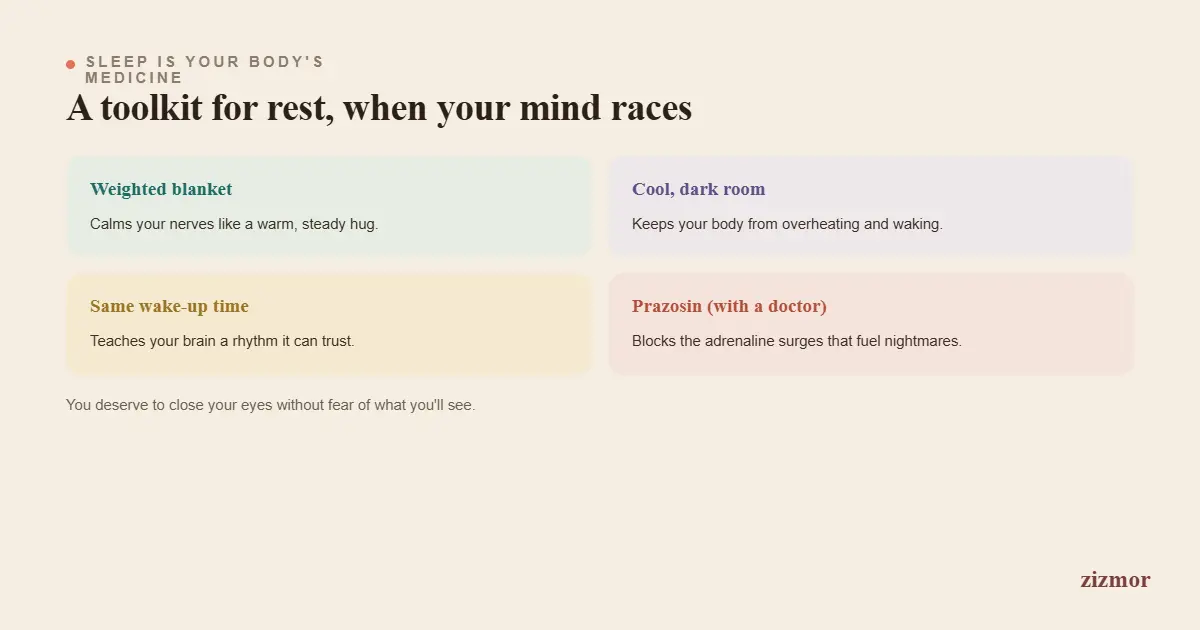
Let us look at a simple plan for your bedroom:
A cold room helps you stay asleep. A weighted blanket makes your body feel secure. It signals your brain that you are safe in bed.
If nightmares keep waking you up, talk to a doctor. There is a medicine called prazosin. It is a blood pressure pill, but it does something special for trauma survivors. It blocks adrenaline in your brain. It stops those sudden spikes of terror that wake you up gasping for air. It lets you sleep peacefully through the night. You deserve to close your eyes without being afraid of what you will see in your dreams.
How Does Trauma Change the Way We Connect?
Trauma is lonely. It builds a wall between you and the people who care about you. We must understand the impact of ptsd on relationships.
When you are hurting, you might push people away. You might feel numb and unable to show love. Or you might get angry over tiny things. Your partner does not understand why you are upset. They feel hurt. You feel misunderstood.
Your brain is simply trying to protect you from getting hurt again. But this protection ruins your connections. We help couples learn to talk again. We teach your loved ones how trauma works so they can support you, not fight you.
This struggle also follows you to your job. You need tools for managing ptsd triggers at work. A loud noise, a demanding boss, or a crowded room can start a panic attack.
Try to arrange your desk so you can see the door. This small change helps your brain feel safe. Take tiny breaks to breathe deeply. Find a quiet spot where you can sit for five minutes if you feel overwhelmed. You do not have to tell everyone your secrets. But you can ask for simple changes that help you do your best work.
You also need a community of peers. We encourage you to look for online ptsd support groups free to try. These groups connect you with people who really get it. They do not judge you. They do not tell you to "just get over it." They listen. You can log on at night when you cannot sleep. You can share your small wins and find hope. You realize you are not alone in the dark.
How Do You Get Financial Help for Trauma?
Sometimes, trauma is too heavy. You cannot work. You cannot pay your bills. This stress makes your health even worse. You need time to focus on healing, without worrying about money.
Let us talk about how to get a disability for ptsd. The government has program rules to help you. The Social Security Administration outlines these rules in their 'Blue Book,' which you can read about in this detailed guide on qualifying for SSDI with PTSD." To qualify, you must show that your trauma stops you from working.
You need to prove several things: First, you must have medical proof of your trauma. Second, you must show that your symptoms cause major limits in your life.
These limits must affect how you behave in these areas:
- Remembering or understanding information.
- Interacting with other people.
- Staying focused on a task.
- Managing your own emotions.
Let us look at a simple table to see how the paths work:
Keep going to your doctor. Make sure they write down every symptom in your file. We can help you gather this proof so you can get the help you deserve.
What Should You Read to Understand Your Journey?
Reading about your struggle can feel like a warm light in a dark room. It shows you that you are not crazy. It shows you that other people have felt this way and survived.
We want to share the best books on ptsd recovery with you. These books are highly recommended by therapists around the world.
The first book is "The Body Keeps the Score" by Dr. Bessel van der Kolk. This book shows how trauma lives in your physical body. It explains why you feel panic in your chest or stomach, even when your mind knows you are safe. It teaches you how somatic movement and EMDR can help release this pain. It is a great book, but it can be hard to read if you are in early recovery. Take it slow. Read a few pages at a time.
The second book is "Complex PTSD: From Surviving to Thriving" by Pete Walker. This book is a lifesaver for anyone who grew up in a scary home. It is very practical. It gives you simple steps to manage your emotional flashbacks and quiet your inner critic.
Pete Walker talks about the four Fs of survival:
- Fight: You get angry and try to control everything around you to stay safe.
- Flight: You stay busy all the time or run away from your feelings.
- Freeze: You hide in your room, watch TV, and tune out the world.
- Fawn: You try to make everyone else happy so they do not hurt you.
You can flip to any page and find quick tools to help you feel better. It is a book written by a survivor, for survivors. It feels like a kind friend holding your hand.
How Do You Cope When the Past Attacks You?
Flashbacks are terrifying. You are standing in your kitchen, but suddenly you are back in that scary room. Your heart drops. You cannot breathe. You feel like you are going to die. Your hands shake.
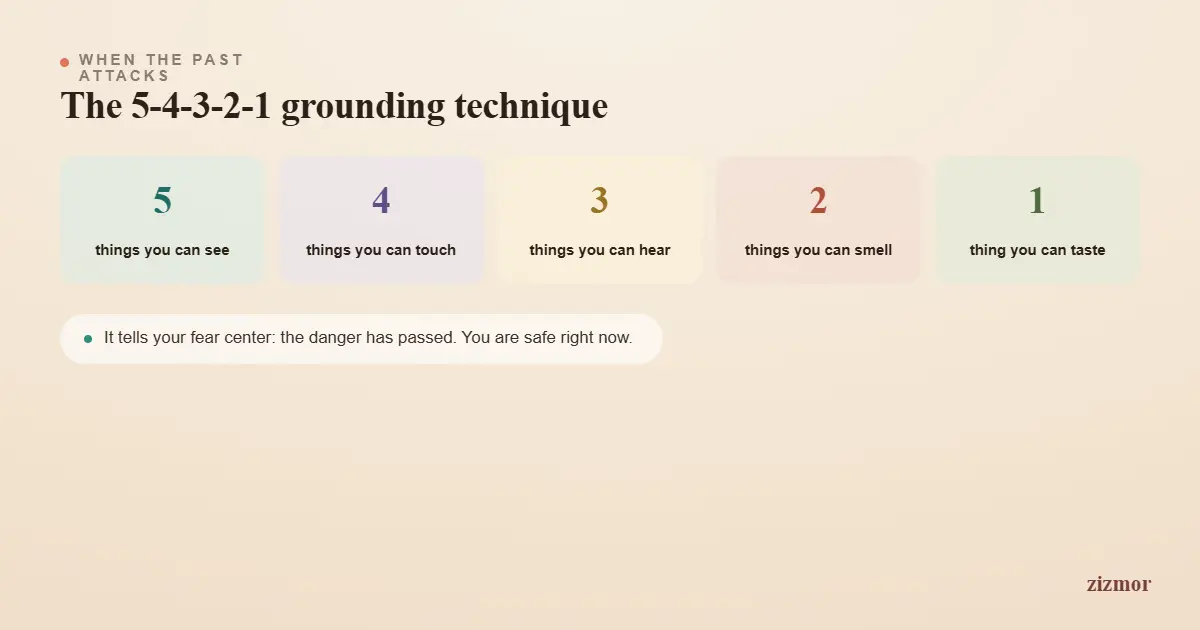
You must learn how to cope with ptsd flashbacks to protect yourself in these moments. We want you to practice a simple physical grounding method.
It is called the 5-4-3-2-1 technique. When the panic hits, look around you and name these things:
- Five things you can see: The chair, the window, a cup, your hand, the floor. Name them out loud.
- Four things you can touch: Your warm skin, the cold table, your soft shirt, the hard floor. Feel the texture.
- Three things you can hear: The wind, a car driving by, a clock ticking. Listen closely.
- Two things you can smell: Coffee, soap, or fresh air. Breathe in deep.
- One thing you can taste: A mint or just a sip of cool water. Focus on the flavor.
This simple exercise forces your brain to look at the present moment. It tells your hyperactive fear center that you are safe right now. The danger has passed. You are okay. You are in your room, and you are safe.
Reclaiming Your Peace Today
Reclaiming your life is a step-by-step process. You did not choose to go through trauma, but you can choose to heal. We know you are tired. We know you are scared. But you do not have to carry this heavy weight alone.
Our clinic is led by Dr. Michael J. Zizmor. With his decades of clinical training from Berkeley, Kansas, Boston, and St. Elizabeths, he knows the way back to safety. We have the tools. We have compassion. We want to walk this path with you.
If you are ready to put an end to the silent panic of ptsd, we are ready to listen. Contact our team today to schedule your evaluation. Let us help you find your way back to a peaceful life.
FAQs
Can young children develop this painful struggle?
Yes. Even tiny babies store terror in their growing bodies. This hidden fear will ruin their future if you ignore it. Do not let your child suffer in silence. Call us today to protect their mind.
Can a brain scan diagnose your trauma?
No. A machine cannot read your deep emotional pain. Doctors must listen to your story to find the truth. Your invisible wounds are real and dangerous. Call us right now to start your true clinical healing.
Can you inherit trauma from your parents?
Yes. Scientists know that family pain can pass down through your blood. This means you carry stress you did not even cause. Stop this cycle before it hurts your own kids. Reach out to us right now.
Does trauma drive people to drink heavily?
Yes. Many people use alcohol to quiet the screaming fear in their heads. But this habit will slowly destroy your life and lock you in pain. Stop hiding from your past. Call our office today to break free.
Can trained service dogs help you heal?
Yes. A special dog can feel your panic attacks before they even start. They wake you from nightmares and keep you safe. Do not battle this monster alone. Call us now to build your ultimate recovery team.